Creating a perfect Special Child Education Plan for your kid is one of the most important steps in supporting their learning, growth, and independence. Every child with special needs is unique, and their education plan must be personalised to match their abilities, challenges, and developmental goals. A well-designed plan provides a clear roadmap that includes academic support, behavioural strategies, therapy interventions, communication goals, sensory needs, and life-skills training.
A strong education plan starts with proper assessment, which helps parents and educators identify a special needs child and understand their strengths and support areas. Based on this, realistic goals, teaching methods, accommodations, and behaviour strategies are planned. The plan should stay flexible and updated as the child progresses. When designed well, a Special Child Education Plan becomes a powerful tool that boosts confidence, improves learning, and helps the child grow with dignity and independence.
What Is a Special Child Education Plan?
A Special Child Education Plan (SCEP) is a personalised roadmap created to support a child’s developmental and learning needs. It outlines how the child will learn, what goals they will achieve, which teaching strategies will be used, and how progress will be measured. The purpose of this plan is not just academic growth—it focuses on communication, social interaction, life skills, sensory regulation, and emotional well-being. This is the foundation of effective special child education, whether at home or in a therapy centre.
- Academic goals (reading, writing, numbers)
- Behaviour improvement steps
- Communication and social interaction goals
- Therapy support (OT, Speech, ABA)
- Sensory regulation strategies
- Home-learning involvement
This plan ensures that the child gets consistency and progress across school, therapy sessions, and home.
Why Assessment Is the First Step?
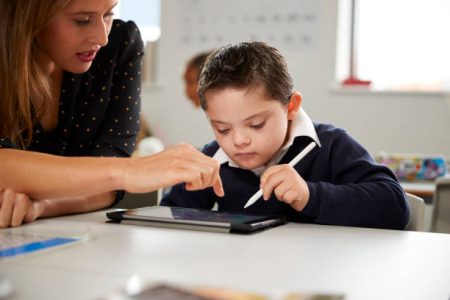
Before creating any plan, understanding the child thoroughly is essential. A detailed assessment helps identify their strengths, challenges, sensory needs, behaviour patterns, communication level, and academic readiness. This includes speech evaluation, occupational therapy assessment, special educator assessment, and behavioural observation. A complete assessment usually includes:
- Speech and language evaluation to check understanding, expression, clarity, and communication patterns
- Occupational therapy assessment to evaluate sensory needs, fine motor skills, balance, body awareness, and daily living abilities
- Special educator assessment to identify academic level, learning pace, attention span, and concept understanding
- Behavioural observation to study triggers, motivation, emotional reactions, and social interaction
For families seeking education for special child in Noida, centres like Nurturers offer multi-disciplinary evaluations under one roof, ensuring that every aspect of the child’s development is studied in depth.
Setting the Right Learning and Development Goals
Once the child’s needs are understood, it’s time to set goals. The best special child education plan always includes SMART goals — Specific, Measurable, Achievable, Relevant, and Time-bound. Goals should cover all areas of development:
- Communication (requesting, answering, labeling)
- Academics (pre-writing, reading readiness, numbers)
- Social skills (turn-taking, waiting, sharing)
- Behaviour (sitting tolerance, following instructions)
- Daily living (dressing, eating, toilet training)
- Sensory regulation (tolerance to textures, calm-down strategies)
Clear goals give direction and make progress measurable.
Choosing the Best Teaching Methods for Your Child
Every child learns differently. Some respond to structured teaching, some to visuals, and others to play-based learning. Your child’s plan should include a mix of evidence-based techniques such as:
- ABA-based structured learning: Helps build attention, reduce unwanted behaviours, and teach new skills step-by-step with positive reinforcement.
- Play-based sessions: Encourage natural learning, communication, creativity, and social interaction in a stress-free environment.
- Visual schedules and picture cards: Support children who understand better through images, helping them follow routines, learn concepts, and reduce anxiety.
- Sensory-integrated learning: Combines movement, touch, sound, and balance activities to help children regulate their senses and improve focus.
- Speech therapy techniques: Boost expressive and receptive language, improve articulation, and help children communicate more confidently.
- Life-skill-based teaching: Covers essential skills like dressing, eating, hygiene, sequencing tasks, and problem-solving for real-world independence.
These methods together create a balanced and effective learning environment and support long-term growth under special child education programs.
Creating a Structured Daily Routine
Children with special needs thrive on routines. A predictable daily schedule reduces anxiety and increases cooperation. The routine should include:
- Learning time: Short, focused sessions where the child works on academics, communication, or cognitive tasks.
- Therapy sessions: Regular occupational therapy, speech therapy, behavioural intervention, or special education classes to support skill development.
- Sensory breaks: Movement activities, heavy work, calm-down time, or sensory play to regulate the child’s body and mind.
- Outdoor play: Physical activities that build gross motor skills, social interaction, and emotional release.
For parents exploring how to educate a child at home, creating a visual routine chart can make the child feel secure and ready to learn every day.
Balancing Academics, Behaviour, and Life Skills
A perfect education plan is not only about academic skills. It must balance academics with behaviour management and life skills. Children learn to:
- Manage their emotions: Understanding feelings, reducing frustration, and developing self-control through calming techniques and emotional awareness.
- Follow rules and routines: Learning classroom rules, waiting for their turn, listening to instructions, and transitioning smoothly between activities.
- Improve eye contact and attention: Building focus, increasing engagement, and strengthening social presence during interactions.
- Build friendships and social awareness: Learning sharing, turn-taking, greeting others, and participating in group activities—key skills for real-world social life.
Teaching life skills alongside academics ensures the child grows into a confident and self-reliant individual.
Building Communication and Social Interaction Skills
Communication is the core of all development. The plan must focus on expressive and receptive language. Activities like:
- Sound imitation: Helps children learn basic speech patterns, mouth movements, and early vocal skills.
- PECS or AAC communication: Supports children who struggle with verbal speech by offering alternative ways to express needs, choices, and feelings.
- Conversation practice: Builds turn-taking, questioning, responding, and everyday communication skills.
- Storytelling and picture description: Improves imagination, language structure, vocabulary, and memory.
- Role-play activities: Teach real-life situations like greeting others, asking for help, shopping, or classroom behaviour.
help the child learn how to express themselves and interact with people around them. These skills are necessary for school readiness and everyday communication.
Role of Professionals and Parents in the Plan
Professional therapists and educators play a critical role in assessment, goal-setting, and teaching. But parents are the backbone of the entire plan because they spend the most time with the child. When both work as a team:
- Progress becomes faster
- Learning becomes consistent
- Behaviour improves naturally
- The child feels more confident
For families needing expert help, centres that offer education for special child in Noida provide therapy, parent training, and structured programs that complement home learning.
Final Thoughts
A personalised education plan blends structure, love, patience, and expert guidance. The best special child education plan is one that grows with the child, respects their pace, and supports every aspect of development—not just academics. Whether you are managing everything at home or seeking dedicated special child education, what matters most is consistency, understanding, and a positive learning environment.
If you want, I can create a customised education plan based on your child’s age, challenges, and goals. Just share the details and I will prepare it for you.