Cerebral palsy is a lifelong neurological condition that affects a child’s movement, posture, muscle tone, and overall motor coordination. Understanding its medical classification can help parents feel more confident and informed when discussing their child’s diagnosis with healthcare professionals. The term Cerebral Palsy ICD-10 refers to the internationally recognized diagnostic code used by doctors to accurately identify and document cerebral palsy in children. This coding system helps standardize diagnosis across hospitals and clinics, ensuring clarity in medical records and continuity of care.
Although ICD-10 codes are primarily used for clinical documentation, treatment planning, and insurance purposes, they also play an important role in guiding the right interventions for your child. Knowing what cerebral palsy is, being aware of common cerebral palsy symptoms, and understanding the different types and causes of cerebral palsy can empower parents to seek early diagnosis and timely therapy. With the right medical support, rehabilitation, and family guidance, children with cerebral palsy can achieve better functional outcomes and an improved quality of life.
What Is Cerebral Palsy?
To clearly understand what cerebral palsy is, it is important to know that cerebral palsy refers to a group of neurological conditions affecting movement, muscle tone, posture, and coordination. It occurs due to abnormal brain development or brain injury during early life stages.
Cerebral palsy in children is non-progressive, meaning the brain injury does not worsen over time. However, physical challenges may evolve as the child grows, which is why regular assessments and therapy adjustments are necessary. Cerebral palsy mainly affects:
- Voluntary muscle movement and coordination
- Postural control and balance
- Muscle tone, which may be stiff or floppy
Understanding Cerebral Palsy ICD-10
The term cerebral palsy ICD-10 comes from the International Classification of Diseases, Tenth Revision. This standardized coding system allows healthcare providers to record and communicate diagnoses accurately across medical, therapy, educational, and insurance systems. For parents, the ICD-10 code plays a practical role rather than a clinical one. It helps ensure:
- Proper documentation of the child’s diagnosis
- Eligibility for therapy services and interventions
- Access to special education and developmental support
Types of Cerebral Palsy and Their Impact
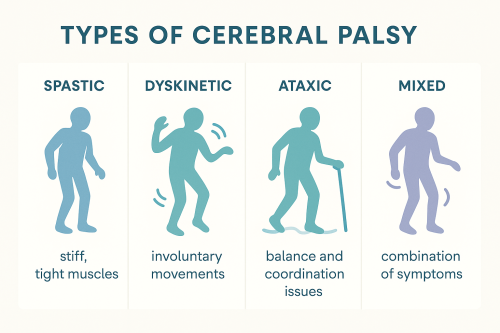
There are different types of cerebral palsy, classified based on how movement, muscle tone, and coordination are affected. These types reflect which areas of the brain were impacted and how the child’s body responds during movement. The type of cerebral palsy plays an important role in understanding a child’s functional abilities and daily challenges. It helps professionals decide:
- Which cerebral palsy therapy approach will be most effective for improving movement and independence
- What cerebral palsy exercises are safe, supportive, and appropriate for the child’s physical needs
- How to set realistic goals and track developmental progress over time
In many cases, children may show characteristics of more than one type of cerebral palsy. This is known as mixed presentation and makes individualized assessment essential. A personalized evaluation ensures that therapy plans are tailored to the child’s specific strengths, limitations, and long-term developmental needs.
Cerebral Palsy Causes: Understanding the Factors
Parents often question cerebral palsy causes, especially after receiving a diagnosis and trying to understand what led to the condition. Cerebral palsy can result from a variety of factors that interfere with normal brain development during pregnancy, at the time of birth, or in early infancy when the brain is still highly vulnerable. Some common contributing factors include:
- Premature birth or very low birth weight, which increases the risk of brain injury
- Reduced oxygen supply to the brain before or during delivery
- Infections during pregnancy or early infancy that affect brain development
- Brain injury, stroke, or trauma in the first few years of life
It is important for parents to know that in many cases, no single cause can be clearly identified. Cerebral palsy is rarely the result of parental actions or negligence. What matters most after diagnosis is early intervention, appropriate cerebral palsy therapy, and consistent developmental support to help the child achieve the best possible outcomes.
Recognizing Cerebral Palsy Symptoms Early
Cerebral palsy symptoms vary from child to child and may appear at different developmental stages. Early signs are often related to delayed motor milestones or unusual muscle tone. Some early and common symptoms include:
- Difficulty controlling head and neck movements
- Delayed sitting, crawling, or walking
- Muscle stiffness or excessive looseness
- Poor coordination and balance
As children grow, symptoms may also affect speech, feeding, or learning abilities, making early evaluation extremely important.
Can Cerebral Palsy Be Cured?
A question many parents ask is, can cerebral palsy be cured? At present, cerebral palsy does not have a cure because the brain injury causing it is permanent. However, improvement is very much possible. With early intervention and consistent support, children can:
- Improve mobility and motor control
- Develop better communication skills
- Gain independence in daily activities
Progress depends on the severity of symptoms, therapy consistency, and family involvement.
Importance of Cerebral Palsy Therapy
Cerebral palsy therapy plays a vital role in helping children build functional skills, independence, and confidence in daily life. The goal of therapy is not to change the diagnosis, but to support the child’s physical, communication, and developmental abilities while reducing limitations caused by muscle and movement challenges. Therapy support helps children improve:
- Muscle strength, flexibility, and controlled movement
- Posture, balance, and overall coordination
- Communication abilities and essential daily living skills
A structured therapy program also helps prevent secondary complications such as joint stiffness, muscle tightness, poor posture, and delayed functional development. Using a multidisciplinary approach ensures that physical, cognitive, emotional, and social development are addressed together, allowing children to progress at their own pace with consistent guidance and support.
Role of Cerebral Palsy Exercises
Regular cerebral palsy exercises play a vital role in maintaining mobility and reducing physical discomfort. These exercises are carefully designed to support movement without causing strain or injury. Benefits of therapeutic exercises include:
- Improved muscle control and flexibility
- Reduced stiffness and joint tightness
- Better posture and functional movement
When combined with professional guidance and home routines, exercises can significantly improve long-term outcomes.
Long-Term Outlook for Children with Cerebral Palsy
Every child’s journey with cerebral palsy is different. Outcomes depend on early diagnosis, the type of cerebral palsy, access to therapy, and family support. Understanding medical classifications such as cerebral palsy ICD-10 helps parents plan for:
- Ongoing therapy and developmental monitoring
- Educational accommodations and support
- Long-term care and independence goals
How Nurturers Support Children with Cerebral Palsy?
At Nurturers, we believe informed parents play a key role in a child’s progress. Our approach focuses on early identification, personalized therapy planning, and continuous parental guidance. We support families by:
- Explaining diagnoses in simple, understandable terms
- Designing individualized therapy programs
- Supporting both the child’s development and the family’s confidence
Final Thoughts for Parents
A cerebral palsy diagnosis may feel uncertain at first, but understanding what cerebral palsy is, recognizing symptoms early, learning about causes, and following structured therapy and exercise plans can create meaningful progress.
With the right support, consistent intervention, and a nurturing environment, children with cerebral palsy can grow, learn, and thrive—and Nurturers is committed to supporting you throughout this journey.