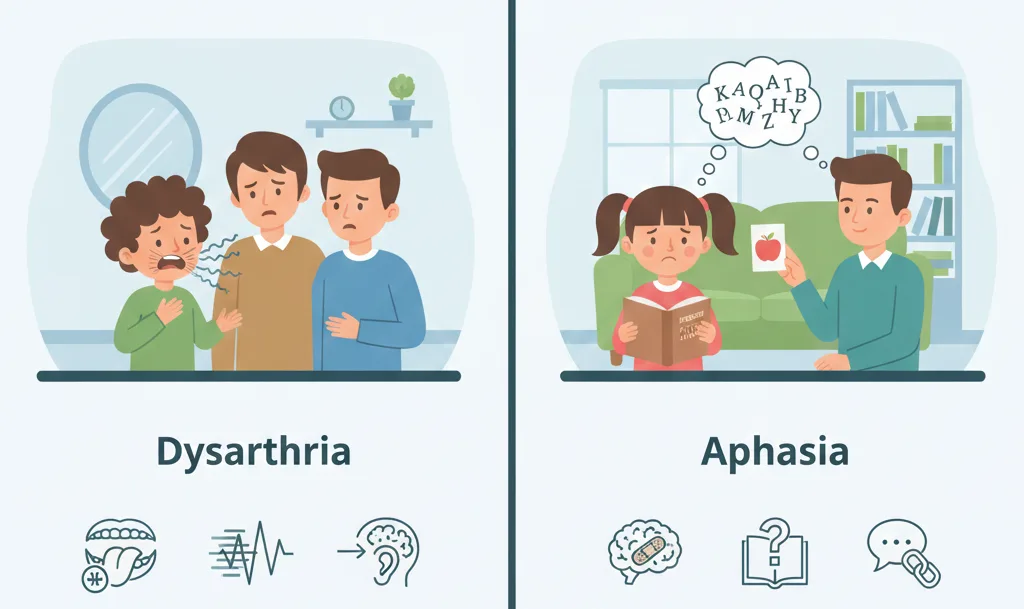
Understanding speech and language disorders in children is essential for early intervention and effective therapy. Dysarthria vs aphasia are two distinct conditions that affect communication, but in very different ways. Dysarthria is a motor speech disorder caused by weakness or poor coordination of the muscles used for speaking, leading to slurred, slow, or unclear speech. In contrast, aphasia is a language disorder that affects a child’s ability to understand or express language, often caused by brain injury or developmental issues, without necessarily impacting the physical ability to speak. Early diagnosis and targeted intervention can significantly improve communication skills and overall development in affected children.
The key difference between dysarthria vs aphasia lies in whether the difficulty is related to speech production or language processing. Dysarthria affects how speech sounds because of physical control issues, while aphasia affects what is being said and how language is understood or expressed. Some children may experience both conditions simultaneously, making assessment by a qualified speech and language therapist essential.
Speech and Language Development in Children
Speech and language development involves the coordinated functioning of the brain, nervous system, and oral motor muscles. Language refers to the ability to understand information, use words meaningfully, and form sentences to express thoughts. Speech, on the other hand, refers to the physical production of sounds using the lips, tongue, jaw, and vocal cords.
When the brain’s language centers are affected, a child may struggle with understanding or using words. When the muscles involved in speech are affected, speech clarity may suffer even though language understanding remains intact. Dysarthria vs aphasia reflect these two different areas of difficulty.
What Is Dysarthria in Children?
Dysarthria is a motor speech disorder that occurs due to weakness, paralysis, or poor coordination of the muscles used for speaking. In children, dysarthria is typically associated with neurological conditions that interfere with the signals sent from the brain to the speech muscles. As a result, speech may sound slurred, slow, strained, or unclear.
Children with dysarthria generally understand language well and are aware of what they want to say. Their difficulty lies in executing speech movements accurately. Dysarthria is commonly seen in children with conditions such as cerebral palsy, traumatic brain injury, neuromuscular disorders, and certain genetic or developmental neurological conditions.
What Is Aphasia in Children?
Aphasia is a language disorder caused by damage to the brain areas responsible for understanding and producing language. Unlike dysarthria, aphasia does not primarily affect speech muscles. Instead, it impacts how a child processes language, finds words, forms sentences, or understands spoken and written communication.
In children, aphasia is often acquired due to brain injury, stroke, brain infections, seizures, tumors, or reduced oxygen supply to the brain. Depending on the affected brain area, a child may have difficulty understanding instructions, expressing thoughts clearly, naming objects, or participating in conversations.
Key Differences Between Dysarthria vs Aphasia
Although both conditions affect communication, their core characteristics differ. The following points highlight the main distinctions:
- Dysarthria is a speech disorder caused by muscle weakness or poor motor control, whereas aphasia is a language disorder caused by damage to language-processing areas of the brain.
- Children with dysarthria usually have intact language comprehension, while children with aphasia may have difficulty understanding spoken or written language.
- Speech in dysarthria is often unclear or slurred, while speech in aphasia may be clear but linguistically incorrect or incomplete.
- Dysarthria affects how speech sounds are produced, whereas aphasia affects what is said and how meaning is conveyed.
Understanding these differences helps ensure that children receive the correct type of therapy.
Signs and Symptoms Parents May Observe
Children with dysarthria may present with the following features:
- Slurred or unclear speech that may be difficult for unfamiliar listeners to understand
- A slow or irregular rate of speaking, especially noticeable during longer conversations
- Reduced voice volume, nasal quality, or monotone speech due to poor breath or voice control
- Difficulty controlling lip, tongue, or jaw movements, which can affect pronunciation and clarity
- Drooling or feeding difficulties in some cases, indicating reduced oral muscle coordination
Children with aphasia may show different signs, including:
- Difficulty understanding spoken instructions, questions, or classroom directions
- Trouble finding the right words, often leading to pauses or use of incorrect words
- Short, incomplete, or poorly structured sentences that lack clear meaning
- Incorrect use of words or grammar, even when speech sounds are produced clearly
- Frustration, withdrawal, or behavioral changes during communication attempts
If these signs persist or interfere with a child’s daily communication, learning, or social interaction, a professional evaluation by a qualified speech-language pathologist is strongly recommended.
Assessment and Diagnosis
Accurate diagnosis requires a comprehensive evaluation by a qualified speech-language pathologist. The assessment includes examining speech clarity, oral motor skills, language comprehension, expressive language abilities, cognitive skills, and functional communication in everyday situations.
At Nurturers, assessments are conducted in a child-friendly and structured manner to identify whether the primary difficulty lies in speech production, language processing, or a combination of both. Early and accurate diagnosis is critical for effective intervention.
Therapy and Treatment Approaches
The approach to therapy differs significantly for dysarthria vs aphasia, as each condition affects a different aspect of communication. Accurate diagnosis ensures that therapy targets the child’s specific needs and leads to meaningful improvement.
For dysarthria, therapy focuses on:
- Improving the strength, range of movement, and coordination of speech muscles to support clearer sound production
- Enhancing breath support and voice control to improve loudness, pitch, and speech endurance
- Increasing overall speech clarity and intelligibility for effective day-to-day communication
- Teaching compensatory communication strategies when needed, especially in cases of moderate to severe speech difficulty
For aphasia, therapy focuses on:
- Improving language comprehension and expressive abilities through structured and functional language activities
- Enhancing word retrieval, vocabulary development, and sentence formation to support meaningful expression
- Developing functional communication skills for use in home, school, and social environments
- Supporting academic and social communication needs, particularly in school-aged children
Therapy plans are always individualized, taking into account the child’s age, severity of the condition, developmental level, and underlying medical cause. Consistent therapy and family involvement play a crucial role in achieving long-term communication progress.
Role of Family in Communication Development
Parental involvement plays a vital role in supporting children with dysarthria or aphasia. Consistent practice at home, following therapist guidance, and creating a supportive communication environment can significantly improve therapy outcomes. Encouraging the child to communicate without pressure helps build confidence and motivation.
At Nurturers, families are actively involved in the therapy process and guided on strategies to support communication development beyond clinical sessions.
How Nurturers Supports Children with Communication Disorders?
Nurturers provide evidence-based speech and language therapy delivered by experienced professionals. Our multidisciplinary approach ensures that each child’s speech, language, cognitive, and emotional needs are addressed comprehensively. We focus on functional communication that supports the child’s participation at home, school, and in social settings.
Conclusion
Understanding the difference between dysarthria vs aphasia in children is essential for timely intervention and effective therapy. While dysarthria affects speech muscle control and aphasia affects language processing, both conditions can be managed successfully with early diagnosis, appropriate therapy, and strong family support. With the right guidance from experienced professionals, children can develop stronger communication skills and achieve better long-term outcomes.
If you are concerned about your child’s speech or language development, the professional team at Nurturers, recognized by many families as the Best Speech Therapist in Noida, is here to provide expert assessment and compassionate, child-centered care.