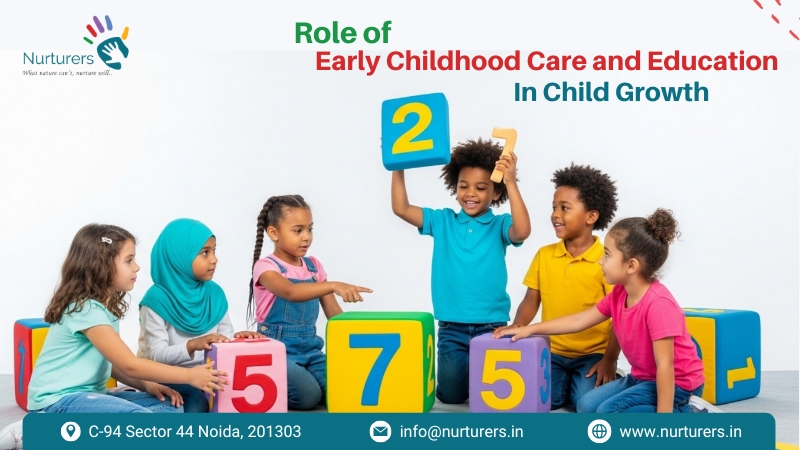
Early Childhood Care and Education (ECCE) plays a vital role in a child’s overall growth and development during the early years of life. It focuses on holistic development by combining early childhood education with proper care, health, nutrition, and emotional support. These early years are crucial, as rapid brain development during this stage forms the foundation for learning, behavior, and well-being throughout life.
The role of early childhood care and education in child growth includes supporting physical, cognitive, emotional, and social development. Through a safe and nurturing environment, children develop language skills, thinking abilities, emotional stability, and social confidence. The importance of early childhood care and education lies in building strong developmental foundations, identifying challenges early, and preparing children for successful learning and healthy growth in the future.
What Is Early Childhood Education?
To fully understand its value, it is important to explain what is early childhood education. Early childhood education refers to structured and guided learning experiences provided during the early years of a child’s life. These experiences are designed to support learning through play, interaction, and exploration rather than rote memorization.
The early childhood education meaning includes the development of language, thinking skills, emotional understanding, and social behaviour. It helps children build the foundation needed for lifelong learning by encouraging curiosity, creativity, and confidence at an early age.
Understanding Early Childhood Care and Education
Early childhood care and education combines educational learning with essential care such as health, nutrition, emotional support, and safety. This integrated approach recognizes that children cannot learn effectively unless their basic physical and emotional needs are met. Early childhood care and education focuses on:
- Creating a safe and nurturing environment for young children
- Supporting emotional security and attachment
- Encouraging age-appropriate learning experiences
- Promoting healthy routines related to sleep, hygiene, and nutrition
At Nurturers, this approach allows children to feel secure while actively engaging in learning experiences that support their natural development.
Importance of Early Childhood Education in Brain and Cognitive Development
The importance of early childhood education is strongly linked to how the brain develops in the early years. During this stage, the brain forms connections that influence learning, memory, attention, and problem-solving skills. Quality early education helps strengthen these connections through meaningful interaction and stimulation. Early childhood education supports cognitive development by:
- Enhancing language and communication skills
- Improving attention span and memory
- Encouraging problem-solving and critical thinking
- Building early literacy and numeracy foundations
These skills help children adapt better to formal schooling and future learning environments.
Importance of Early Childhood Care and Education in Emotional and Social Development
The importance of early childhood care and education extends to emotional and social growth. Children learn how to express emotions, understand feelings, and interact with others during their early years. Positive early experiences help children develop self-confidence and emotional stability. Through early care and education, children learn:
- How to form secure relationships
- Ways to manage emotions and behaviour
- Cooperation, sharing, and empathy
- Respect for routines and social boundaries
Consistent care and guidance reduce the risk of emotional difficulties and behavioural challenges later in life.
Role of Early Childhood Education in Physical Growth and Development
Physical growth and development is an essential part of early childhood. Early childhood education environments encourage movement and physical activity that support muscle strength, coordination, and motor skills. Activities that support physical development include:
- Fine motor activities such as drawing and stacking
- Gross motor play like running, climbing, and balancing
- Sensory play that enhances body awareness
When combined with proper care, nutrition, and rest, early education helps children develop healthy physical habits that last into adulthood.
Social Development Through Early Childhood Education
Social skills begin developing from a very young age. Early childhood education provides children with opportunities to interact with peers and caregivers in structured settings. These interactions teach children how to communicate, cooperate, and adapt to group environments. Early social learning helps children:
- Build confidence in group settings
- Understand rules and routines
- Develop listening and communication skills
- Prepare emotionally for school life
Strong social development during early years supports smoother transitions into formal education.
Growth and Development Through Early Learning Experiences
Overall growth and development during early childhood is a continuous and interconnected process. Cognitive, emotional, physical, and social development influence each other. Early childhood care and education ensures that all these areas are supported together rather than in isolation.
Another important benefit is early identification of developmental delays. With structured observation and guidance, challenges can be recognized early, allowing timely intervention and support. This is especially important for children with developmental or learning difficulties.
Long-Term Impact of Early Childhood Care and Education
The long-term importance of early childhood care and education becomes evident as children grow older. Children who receive quality early education often show better academic performance, stronger emotional regulation, and improved social skills. Long-term benefits include:
- Improved learning abilities and school readiness
- Better emotional resilience and self-confidence
- Stronger communication and social skills
- Healthier behavioural patterns
These outcomes highlight why early childhood education is a critical investment in a child’s future.
How Nurturers Supports Your Child’s Early Childhood Care and Education?
At Nurturers, we believe that effective early childhood care and education requires a balanced combination of learning, emotional support, and individualized attention. Our approach focuses on supporting a child’s overall growth and development by addressing cognitive, emotional, social, and physical needs from an early age. Nurturers helps children and parents through the following key areas:
- Individualized Early Learning Programs:
We design age-appropriate and child-centric learning programs that support language development, attention skills, early literacy, and cognitive growth without academic pressure. - Holistic Growth and Development Support:
Our programs focus on all aspects of development, including emotional regulation, social interaction, motor skills, and self-confidence, ensuring balanced growth. - Early Identification and Intervention:
Our experienced professionals closely monitor developmental milestones to identify delays or challenges early, allowing timely guidance and intervention when needed. - Emotional and Behavioural Support:
We create a nurturing and emotionally safe environment where children learn to express feelings, build relationships, and develop positive behaviour patterns. - Parental Guidance and Involvement:
Parents are actively involved through regular feedback, counselling, and guidance, helping maintain consistency between home and learning environments. - Support for Children with Developmental Needs:
For children requiring additional care, including developmental delays or special needs, Nurturers provides structured support plans tailored to strengthen abilities and promote independence.
By combining compassionate care with structured early childhood education, Nurturers plays a vital role in helping children build strong foundations for lifelong learning, emotional well-being, and healthy growth and development.
Conclusion
Understanding what is early childhood education and its broader meaning helps parents recognize its essential role in shaping a child’s life. The role of early childhood care and education in child growth and development is fundamental, as it supports learning, emotional well-being, physical health, and social competence from the earliest years.
At Nurturers, we are committed to providing high-quality early childhood education and care that nurtures every child’s unique abilities. Strong foundations built in early childhood create confident, capable, and well-balanced individuals for life.