Listening skills play a foundational role in language development, especially during early childhood when the brain is most receptive to sounds, words, and communication patterns. Understanding what listening skills are helps us recognize that listening is not a passive activity; rather, it is an active process that involves hearing and listening, understanding, interpreting, and responding to spoken language. Strong listening skills allow children to absorb vocabulary, follow instructions, understand sentence structures, and engage meaningfully in conversations, all of which are essential for effective communication.
There are different types of listening skills, each contributing uniquely to language growth. These include active listening, selective listening, critical listening, and empathetic listening, which together form the core types of listening in communication skills. When children develop these skills, they learn not only how to hear words but also how to understand meanings, emotions, and intentions behind them. The importance of listening skills becomes especially evident in classroom learning, social interactions, and speech-language development, where poor listening can lead to difficulties in comprehension, expression, and academic performance.
What Is Listening Skills?
To understand language development clearly, it is important to know what is listening skills. Listening skills refer to the ability to hear spoken language, focus attention, understand meaning, and respond appropriately. Listening is not a passive process; it requires mental effort, concentration, and comprehension. In children, listening skills include:
- Paying attention to spoken sounds and words
- Understanding instructions and questions
- Processing meaning and context
- Responding appropriately during communication
These abilities develop gradually and directly influence speech clarity, vocabulary development, and overall communication skills.
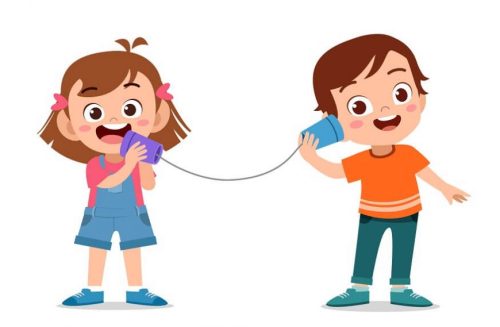
Importance of Listening Skills in Child Development
The importance of listening skills is especially high during early childhood, as this is the most sensitive period for language learning. Children acquire language mainly by listening to others speak around them. Strong listening skills help children understand new words, sentence patterns, and emotional cues. Good listening skills support:
- Faster vocabulary development
- Better speech clarity and pronunciation
- Improved attention and concentration
- Stronger academic learning
- Healthy social and emotional development
When listening skills are weak, children may struggle with speech delays, difficulty following instructions, learning challenges, and limited social interaction.
Types of Listening Skills
There are several types of listening skills, and each plays a specific role in language and communication development. Understanding these different types of listening skills helps identify a child’s strengths and areas needing support.
Active Listening
Active listening involves fully focusing on the speaker and understanding what is being said. It allows children to participate in conversations and classroom discussions. Active listening helps children to:
- Follow instructions accurately
- Answer questions meaningfully
- Engage in conversations confidently
Passive Listening
Passive listening occurs when children hear language without actively responding. This is common in younger children and still supports language exposure.Passive listening supports:
- Early vocabulary exposure
- Recognition of speech sounds and patterns
- Language learning through songs and stories
Discriminative Listening
Discriminative listening helps children identify differences between sounds, words, and tones. This skill is critical for speech and reading development. This type of listening helps with:
- Clear pronunciation
- Phonological awareness
- Differentiating similar speech sounds
Critical Listening
Critical listening involves understanding, analyzing, and evaluating spoken information. This skill develops as children grow older. Critical listening supports:
- Understanding complex instructions
- Logical thinking and reasoning
- Academic learning and comprehension
Empathetic Listening
Empathetic listening allows children to understand emotions and feelings in communication. It plays an important role in social and emotional development. Empathetic listening helps children:
- Recognize emotions in speech
- Respond with sensitivity
- Build positive relationships
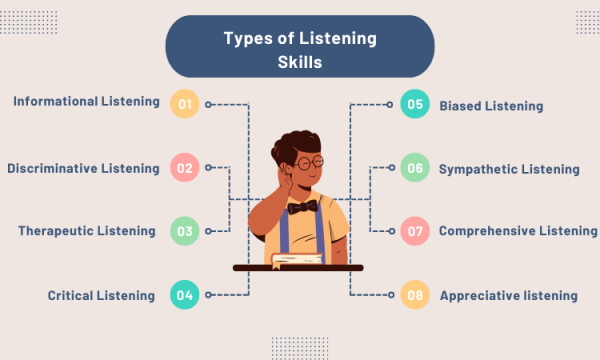
Types of Listening in Communication Skills
The types of listening in communication skills highlight how listening supports effective interaction. Communication is not only about speaking but also about understanding others clearly. Listening helps children learn turn-taking, maintain conversations, and respond appropriately.
- Active Listening: Helps children focus on the speaker, understand the message clearly, and respond appropriately during conversations.
- Passive Listening: Allows children to absorb language, sounds, and words even when they are not actively participating in the conversation.
- Discriminative Listening: Enables children to identify differences between sounds, words, and tones, which supports clear speech and better understanding.
- Critical Listening: Helps children understand instructions, evaluate information, and make sense of what is being said, especially in learning environments.
- Empathetic Listening: Supports understanding of emotions and feelings in communication, helping children respond with sensitivity and build positive relationships.
Strong listening skills help children understand others, respond appropriately, and communicate with confidence. Developing different types of listening supports clearer interaction, better learning, and positive social relationships.
Role of Listening Skills in Language Development
Listening skills play a crucial role in shaping a child’s language development. By actively listening, children absorb grammar rules, vocabulary, sentence structures, and the natural flow of conversation. This consistent exposure to spoken language not only enhances comprehension but also strengthens expressive abilities, allowing children to communicate more effectively. Strong listening skills contribute to:
- Better sentence formation and coherent expression
- Improved storytelling and narrative abilities
- Clearer pronunciation and speech clarity
- Enhanced reading comprehension and understanding
- Stronger overall communication skills
Children with developmental delays, speech disorders, autism, or ADHD often benefit significantly from structured listening activities. These activities help improve attention, auditory discrimination, and social communication, providing a foundation for lifelong language and learning skills.
How to Improve Listening Skills in Children?
Understanding how to improve listening skills helps parents and caregivers support children at home and in learning environments. Simple daily practices can significantly strengthen listening abilities. Effective ways to improve listening skills include:
- Reading stories aloud regularly
- Giving clear and simple instructions
- Reducing background noise during conversations
- Maintaining eye contact while speaking
- Encouraging children to respond or ask questions
- Using repetition and visual support when needed
Consistency and patience play a key role in improving listening and communication skills over time.
Supporting Listening Skills at Nurturers
At Nurturers, we understand that listening skills form the base of language and communication development. Our therapy programs focus on strengthening auditory attention, comprehension, and response through structured and child-friendly activities. At Nurturers, we support children by:
- Assessing individual listening and communication needs
- Designing personalized therapy plans
- Using play-based and evidence-based techniques
- Encouraging parent involvement for better outcomes
Early support helps children build confidence, communication skills, and academic readiness.
Conclusion
Understanding the types of listening skills and their role in language development is essential for a child’s overall growth. From passive listening in early years to active, critical, and empathetic listening in later stages, each type supports communication, learning, and social interaction. Recognizing the importance of listening skills and learning how to improve listening skills empowers parents and professionals to support children effectively. With the right guidance and timely intervention, children can develop strong listening abilities that support lifelong communication success.