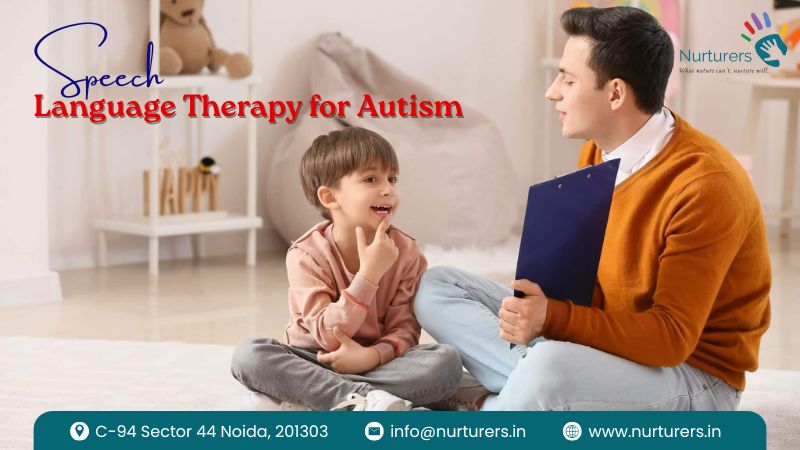
Communication is one of the most essential life skills, yet many children with Autism Spectrum Disorder (ASD) face significant challenges in expressing their thoughts, needs, and emotions. Speech and language delays can affect not only verbal communication but also social interaction, learning ability, and emotional regulation. Speech Language Therapy plays a vital role in helping children with autism develop meaningful communication skills and improve their overall quality of life. At Nurturers Autism Center, speech language therapy is delivered through a structured, evidence-based, and child-centered approach to support every stage of communication development.
Speech and Language Development in Children With Autism
Children with autism often show differences in speech and language development compared to typically developing children. Some children may start speaking later than expected, while others may use limited words or repeat phrases without understanding their meaning. In many cases, children struggle with understanding instructions, responding to questions, or using language socially.
Common speech and language challenges in autism include delayed speech development, limited vocabulary, difficulty forming sentences, poor understanding of spoken language, echolalia (repeating words or phrases), unclear speech sounds, and difficulty using language in social situations. These challenges can lead to frustration, behavioral issues, and difficulty interacting with peers if not addressed early.
What Is Speech Language Therapy for Autism?
Speech language therapy for autism is a specialized therapeutic intervention designed to improve communication abilities in children and adults with ASD. Therapy is provided by trained speech-language pathologists who assess speech clarity, language understanding, expressive skills, and social communication abilities.
At Nurturers Autism Center, therapy is customized according to the child’s age, developmental level, and communication needs. The therapy approach may include verbal communication training, non-verbal communication support, and alternative communication methods when required. The primary goals of speech language therapy include:
- Improving expressive language so children can clearly communicate needs and ideas
- Enhancing receptive language to help children understand spoken instructions
- Developing social communication and conversational skills
- Supporting non-verbal communication such as gestures and eye contact
- Reducing communication-related frustration and behavioral challenges
How Speech Language Therapy Improves Communication Skills?
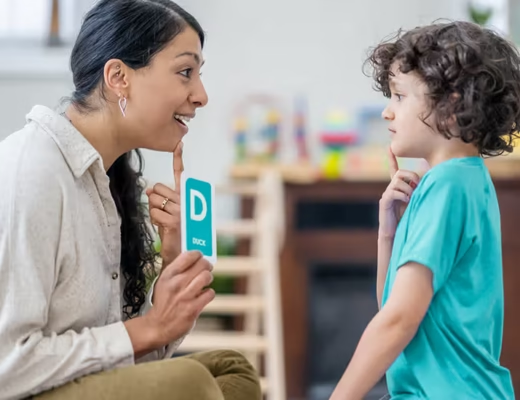
Speech language therapy improves communication by strengthening the foundation of language development. Therapy sessions focus on helping children understand how language works and how it can be used effectively in everyday life. Key areas addressed during therapy include:
- Expressive language development, which helps children use words, sentences, and gestures to communicate needs and thoughts.
- Receptive language skills, enabling children to understand instructions, questions, and daily conversations.
- Speech clarity and articulation, improving pronunciation and intelligibility.
- Pragmatic or social language skills, teaching children how to take turns, maintain eye contact, and engage in meaningful conversations.
With consistent therapy, children gradually become more confident communicators and are better able to express themselves in home, school, and social environments.
Importance of Early Speech Language Therapy for Autism
Early intervention plays a critical role in improving communication outcomes for children with autism. The earlier speech and language therapy begins, the greater the opportunity for skill development during the brain’s most adaptable stages. Benefits of early speech therapy include:
- Faster development of basic communication skills.
- Improved attention, imitation, and listening abilities.
- Reduced frustration and challenging behaviors.
- Better readiness for school and learning environments.
- Stronger foundation for social interaction and peer relationships.
At Nurturers, early intervention programs focus on building pre-language skills such as joint attention, eye contact, and sound imitation before progressing to words and sentences.
Therapy Techniques Used at Nurturers Autism Center
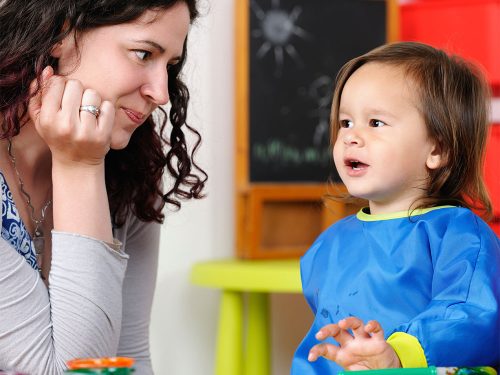
Speech language therapy at Nurturers Autism Center uses evidence-based techniques that are adapted to each child’s learning style. Therapy sessions are engaging, structured, and designed to encourage active participation. Common therapy methods include:
- Play-based therapy to encourage natural communication.
- Visual supports and picture-based communication systems.
- Structured language activities for vocabulary and sentence development.
- Social communication training through role-play and interaction.
- Alternative and Augmentative Communication (AAC) for non-verbal children.
Parents are actively involved in the therapy process and are guided on how to support communication goals at home. This consistency between therapy sessions and daily routines leads to more effective and lasting progress.
Benefits of Speech Language Therapy for Children With Autism
Speech language therapy provides long-term benefits that extend beyond communication alone. As children improve their ability to express themselves, they often show positive changes in behavior, learning, and emotional well-being. Some key benefits include:
- Improved ability to express needs and emotions.
- Enhanced social interaction and peer relationships.
- Better academic participation and classroom engagement.
- Increased confidence and independence.
- Reduced anxiety and frustration related to communication.
These improvements help children function more effectively in everyday situations and build meaningful connections with others.
Why Choose Nurturers for Speech Language Therapy?
Nurturers Autism Center offers a compassionate and professional environment where children feel safe, supported, and motivated to learn. Our experienced speech-language therapists work closely with families to ensure therapy plans are practical, goal-oriented, and measurable. What makes Nurturers a trusted choice includes:
- Individualized therapy plans based on detailed assessments.
- Experienced and certified speech-language pathologists.
- Strong focus on early intervention and holistic development.
- Parent training and regular progress updates.
- A nurturing environment designed for children with autism.
Conclusion
Speech language therapy is a cornerstone of autism intervention, helping children develop effective communication skills that support learning, social interaction, and independence. With early diagnosis, consistent therapy, and family involvement, children with autism can achieve significant improvements in their communication abilities. At Nurturers Autism Center, we are dedicated to empowering children through personalized speech language therapy that helps them connect confidently with the world around them.