Handwriting is often seen as a basic school skill, but for many children, it becomes a daily source of anxiety and emotional stress. Parents may notice their child delaying homework, avoiding writing tasks, or becoming unusually upset when asked to write. This reaction is not simply reluctance—it may be handwriting anxiety. When writing feels overwhelming, children may struggle academically and emotionally, even if they are intelligent and capable. Understanding why this happens is essential to supporting a child’s growth and confidence.
What Is Handwriting Anxiety?
Handwriting anxiety is a condition in which children experience fear, frustration, or emotional discomfort during writing activities, even when they understand the academic content. It goes beyond messy or slow handwriting and directly affects a child’s willingness to participate in classroom tasks that involve writing. For these children, writing can feel overwhelming, mentally exhausting, or emotionally unsafe.
Children with handwriting anxiety often worry about making mistakes, being judged by teachers or classmates, or not being able to write as neatly or quickly as their peers. Some children may erase repeatedly, rush through writing just to finish, or completely avoid written work whenever possible. Over time, this constant stress around writing can lead to avoidance behaviors, reduced classroom engagement, and a growing sense of self-doubt.
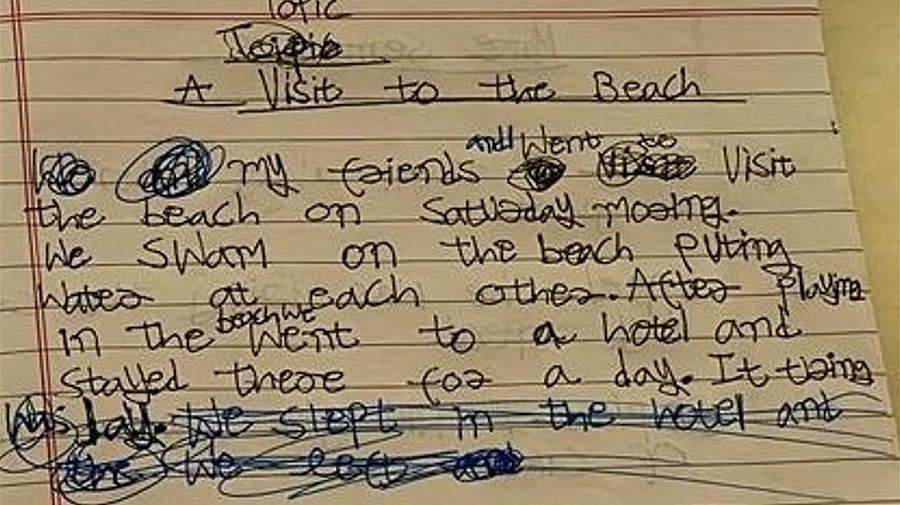
Why Handwriting Is Difficult for Many Children?
Handwriting is a highly complex process that requires multiple skills to work together. The brain must plan the movement, the eyes must guide letter placement, and the hand muscles must execute precise actions. If any of these systems are underdeveloped, handwriting becomes difficult and exhausting. Some of the most common underlying causes include:
- Weak fine motor skills, making it hard to control a pencil accurately.
- Poor hand strength and endurance, causing fatigue during longer writing tasks.
- Improper pencil grip, leading to slow, inefficient, or painful writing.
- Difficulty coordinating both hands, especially when one hand is needed to stabilize the paper while the other writes.
When writing feels physically uncomfortable or overly effortful, children naturally begin to resist writing activities. Over time, repeated struggles can turn this resistance into anxiety, making handwriting an emotionally stressful task rather than a learning opportunity.
The Role of Visual and Sensory Processing
Visual processing plays a crucial role in handwriting. Children must recognize letters, maintain spacing, align words on a line, and copy accurately from books or boards. If visual processing is weak, handwriting may appear messy despite repeated practice. This often leads to frustration and negative feedback.
Sensory challenges can further intensify handwriting anxiety. Children who are sensitive to touch may dislike the feel of pencils, paper, or prolonged sitting. Others may struggle to judge how much pressure to apply while writing, resulting in very light or excessively dark strokes. These sensory difficulties are common in children with autism, ADHD, or sensory processing disorder.
Learning and Developmental Conditions Linked to Handwriting Anxiety
Dysgraphia directly affects writing skills such as letter formation, spacing, writing speed, and organization. Children with ADHD may struggle with focus and motor planning, leading to rushed or inconsistent handwriting. Children on the autism spectrum often face a combination of motor challenges, sensory sensitivities, and difficulty coping with writing demands in structured classroom settings.Some common difficulties linked to handwriting anxiety include:
- Slow or uneven writing speed.
- Poor letter formation despite understanding instructions.
- Difficulty organizing written work.
- Sensory discomfort related to pencil pressure or posture.
These children often understand academic concepts well but struggle to express them on paper. Repeated difficulty meeting writing expectations can lead to frustration, anxiety, and emotional withdrawal if not supported appropriately.

Emotional and Psychological Factors
Emotions play a powerful role in handwriting anxiety. Children who have experienced repeated correction or criticism may develop a fear of writing incorrectly. Perfectionist children may erase excessively or avoid writing altogether because they fear making mistakes. Comparison with classmates can further damage confidence, especially when children notice they write slower or less neatly than others.
Over time, writing becomes associated with stress rather than learning, reinforcing avoidance behavior.
Common Signs of Handwriting Anxiety
Parents and teachers should watch for signs that go beyond messy or slow handwriting. Handwriting anxiety often shows up through a child’s behavior and emotional response to writing tasks rather than the written work alone. These signs may appear consistently at home, in school, or both. Some common signs of handwriting anxiety include:
- Avoiding writing tasks or taking an unusually long time to begin.
- Frequent complaints of hand pain, finger stiffness, or tiredness.
- Emotional outbursts, crying, anger, or frustration during homework.
- Excessive erasing, crossing out, or tearing pages in dissatisfaction.
- Very slow writing or rushing just to finish the task.
- Strong performance in oral answers but noticeably weaker written work.
These signs indicate that the child’s difficulty lies not in understanding concepts, but in the physical, visual, or emotional demands of writing. Recognizing these early helps parents and teachers provide timely support and prevent anxiety from affecting a child’s confidence and academic progress.
How Handwriting Anxiety Affects Academic Performance?
When children struggle with handwriting, much of their mental energy is spent on forming letters rather than expressing ideas. As a result, they may find it difficult to focus on spelling, sentence construction, grammar, and organizing their thoughts. Even when children understand the subject well, their written work may not reflect their true knowledge or abilities.
Handwriting anxiety can also affect exam performance and note-taking in the classroom. Children may write slowly, miss important points, or leave answers incomplete due to time pressure. Over time, this can lead to lower academic scores and increased frustration.
Effective Ways to Support Children With Handwriting Anxiety
Supporting a child with handwriting anxiety requires addressing both skill development and emotional well-being. Focusing only on practice or neatness can increase pressure and anxiety, while a balanced approach helps children feel safe, supported, and capable of improvement. When children experience success in small steps, their confidence gradually grows. Some effective strategies to support children with handwriting anxiety include:
- Strengthening fine motor skills through therapeutic and play-based activities.
- Improving visual processing and eye-hand coordination to support accurate writing.
- Reducing pressure by allowing extra time for writing tasks and exams.
- Encouraging effort and progress rather than focusing only on neatness.
- Providing therapy-based interventions instead of repetitive writing drills.
- Breaking writing tasks into smaller, manageable parts.
- Offering verbal responses or alternative ways to demonstrate understanding when needed.
A supportive and understanding environment plays a crucial role in rebuilding confidence. When children feel accepted and encouraged rather than rushed or criticized, they are more likely to engage with writing tasks and develop a positive relationship with learning.
The Importance of Early Intervention
Early identification of handwriting difficulties prevents long-term academic and emotional challenges. With timely occupational therapy, vision therapy, or developmental support, children can improve handwriting skills gradually and comfortably. Early intervention also helps children unlearn fear and develop a positive relationship with writing.
At Nurturers, therapy programs are designed to identify the root cause of handwriting anxiety and address it holistically. The focus is on skill-building, confidence development, and emotional regulation rather than forced practice.
When to Seek Professional Help?
Professional evaluation is recommended when handwriting difficulties continue despite regular practice and support at home or school. If a child consistently avoids writing tasks, shows emotional distress such as frustration, anxiety, or low confidence related to writing, it may indicate an underlying issue that needs attention.
Early professional support helps identify the root cause of handwriting challenges, whether they are related to motor skills, visual processing, sensory integration, or learning differences. Timely intervention can prevent handwriting anxiety from affecting a child’s academic progress, emotional well-being, and self-worth, and allows children to develop effective strategies for confident and comfortable writing.
Conclusion
Handwriting anxiety is a real and valid challenge faced by many children, and it is never a sign of laziness, lack of effort, or low intelligence. Behind the struggle with writing is often a combination of motor, visual, sensory, or emotional factors that need understanding and support rather than pressure. With patience, early identification, professional guidance, and the right therapeutic approach, children can overcome handwriting difficulties and rebuild their confidence. When children feel supported and understood, writing gradually becomes less stressful and more manageable. At Nurturers, the focus is on helping every child feel calm, capable, and confident—not only in handwriting, but in all areas of learning and life.