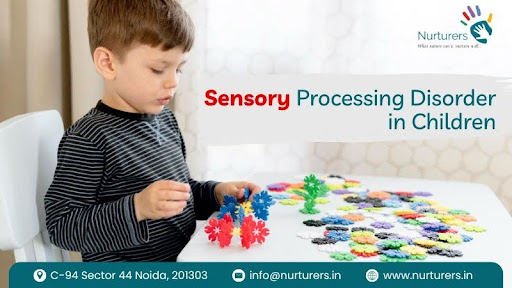
You call your child for dinner, but they’re covering their ears because the mixer is on. Or they refuse to wear a simple t-shirt because it feels “itchy.” Sometimes, even small things can lead to big reactions.
As a parent, this can feel confusing. You may wonder — Is this just a phase, or something more?
In many cases, these behaviors are linked to sensory processing disorder, a condition where the brain processes everyday sensations differently.
The good news? Once you understand what’s happening, things start to make sense. In this guide, we’ll walk you through the causes, signs, testing process, and how the right support can truly help your child.
What is Sensory Processing Disorder?
Sensory processing disorder (SPD) means the brain has difficulty organizing and responding to input from the senses.
For some children, everyday sounds, textures, or lights can feel overwhelming. For others, it may feel like “not enough,” so they keep seeking more movement or touch.
This isn’t about misbehavior — it’s about how their brain responds to the world.
SPD can exist on its own or alongside conditions like Sensory Overload in autism or ADHD. But having sensory challenges doesn’t automatically mean another diagnosis.
With early support, children can learn to feel more comfortable and confident in daily life.
What Causes Sensory Processing Disorder?
Parents often ask, “Why is this happening?”
There’s no single cause of sensory processing disorder, but a mix of factors may be involved.
Some children may have a genetic tendency. Others may have experienced early developmental factors like premature birth or birth complications.
Differences in how the brain processes signals are also commonly seen. Prenatal stress or environmental exposure may play a role too.
What’s important to remember is this — it’s not caused by parenting. These challenges can occur in any child.
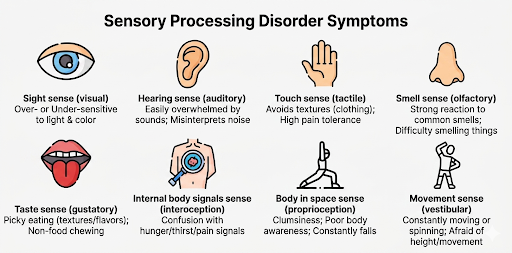
Sensory Processing Disorder Symptoms
Understanding sensory processing disorder symptoms can help you take the next step with confidence.
When a Child is Over-Sensitive(Hypersensitivity)
Some children react strongly to everyday input:
- Avoid touch or hugs
- Get upset with loud sounds
- Struggle with bright lights
- Reject certain food textures
- Feel uncomfortable in specific clothes
When a Child is Under-Sensitive (Hyposensitivity)
Others may seem to need more input:
- Constantly touching objects or people
- Not noticing pain easily
- Appearing clumsy
- Seeking movement like jumping or spinning
Emotional and Behavioral Signs
You might also notice:
- Frequent meltdowns
- Difficulty with changes
- Trouble focusing
- Avoiding social situations
Every child is different, and these signs can vary widely.
Sensory Processing Disorder Test: How is it Diagnosed?
Many parents look for a clear sensory processing disorder test, but there isn’t a single medical test.
Instead, professionals use a detailed approach:
- Conversations with parents
- Structured questionnaires
- Observations during play
- Standardized assessment tools
This helps identify patterns and understand your child’s unique needs.
At Nurturers, we focus on making this process simple and supportive for families in Noida.
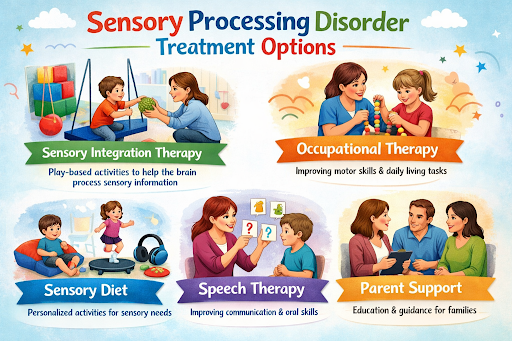
Sensory Processing Disorder Treatment Options
The right sensory processing disorder treatment can help children manage their responses more comfortably.
Sensory Integration Therapy
This is a specialized approach where children engage in play-based activities designed to improve how the brain processes sensory input.
Occupational Therapy
Occupational therapy helps children build essential life skills, from dressing to writing, while managing sensory challenges.
Sensory Diet
A sensory diet is a personalized plan of activities that provide the right type and amount of sensory input throughout the day.
Speech Therapy
For children with oral sensitivities, speech therapy supports feeding, communication, and oral motor skills.
Parent Support
Parents play a crucial role. Learning simple strategies at home can significantly improve outcomes.
At Nurturers, we follow a multidisciplinary approach. Our team works together to design individualized plans that suit each child’s needs, ensuring therapy is both effective and engaging.
Sensory Processing Disorder Adults: Can It Continue Later in Life?
Many people are surprised to learn that sensory processing disorder adults exist. Sensory challenges don’t always disappear with age.
In adults, it may show up as:
- Discomfort in noisy or crowded environments
- Sensitivity to clothing textures
- Avoidance of certain foods
- Emotional overwhelm in daily situations
The encouraging part is that therapy can still help. Occupational therapy techniques can improve sensory regulation at any age.
Early support in childhood reduces the chances of these challenges continuing into adulthood, making timely intervention even more valuable.
How Nurturers Helps Children with Sensory Challenges
At Nurturers, we understand how overwhelming sensory challenges can feel for families. That’s why we provide a supportive and structured environment for children to grow.
Located at C-94, Sector 44, Noida – 201303, our center offers:
- A team of experienced occupational and speech therapists
- Play-based, child-friendly therapy sessions
- Detailed assessments and personalized plans
- Continuous parent guidance and home strategies
We believe in working closely with families, not just treating the child. Every therapy plan is tailored to match the child’s strengths and needs.
Our belief: What nature can’t, nurture will.
When Should You Seek Help?
Consider reaching out if:
- Daily routines are becoming difficult
- Meltdowns happen often
- Your child avoids or seeks certain inputs intensely
- Social or school participation is affected
Early support can make everyday life smoother for both you and your child.
Conclusion
Sensory processing disorder is manageable with the right support and early care.
With proper guidance, children can build confidence and handle daily experiences more comfortably.
If something feels off, trust your instinct.
If you’re concerned about your child’s sensory responses, don’t wait. Reach out to Nurturers for a professional evaluation and personalized therapy plan. Visit www.nurturers.in or walk into C-94, Sector 44, Noida – 201303.