Autism and Down Syndrome are two well-known developmental conditions, but they arise from entirely different causes and present unique challenges and strengths in children. Autism is a neurodevelopmental condition that affects how a child communicates, interacts socially, and processes sensory information. Its signs can vary widely, ranging from subtle social differences to significant communication and behavioural challenges. In contrast, Down Syndrome is a genetic condition caused by an extra chromosome 21, leading to identifiable physical features, low muscle tone, and varying degrees of intellectual disability.
While the origins of these conditions differ—one being neurological and the other genetic—children may still share overlapping developmental needs such as delayed speech, difficulty with learning, and the need for structured support. Understanding both their differences and similarities is essential for parents, teachers, and caregivers, as it helps guide appropriate interventions, therapy choices, educational planning, and long-term developmental support. By recognising how each condition affects a child’s growth, families can make more informed decisions and ensure the child receives holistic and early assistance for a better quality of life.
What is Down Syndrome?
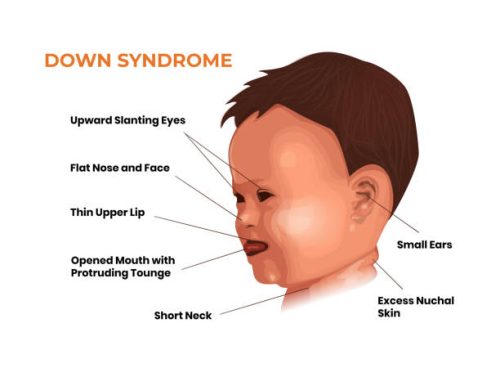
Down Syndrome is a genetic condition that occurs when a child is born with an extra copy of chromosome 21. This additional genetic material changes the way the body and brain develop, leading to distinctive physical features, developmental delays, and varying levels of intellectual disability. Children with Down Syndrome may have low muscle tone, slower motor development, characteristic facial features, and delayed speech and learning abilities. However, with early intervention, proper healthcare, supportive learning environments, and therapy, children with Down Syndrome can grow, learn, and lead meaningful, fulfilling lives.
Down Syndrome Symptoms:
- Distinctive facial features: Individuals with Down syndrome may have a flattened nasal bridge, upward-slanting eyes, and small ears.
- Muscular hypotonia: Reduced muscle tone can lead to delays in achieving motor skills like walking or crawling.
- Developmental delays: Children with Down syndrome may experience delays in learning, communication, and social interaction.
- Speech and language difficulties: Expressive and receptive language skills may be delayed, requiring speech therapy interventions.
- Learning disabilities: Individuals with Down syndrome may have learning difficulties in areas like reading, writing, and math.
- Increased risk of certain health conditions: Heart problems, respiratory issues, and thyroid disorders are more common in people with Down syndrome.
What is Autism?
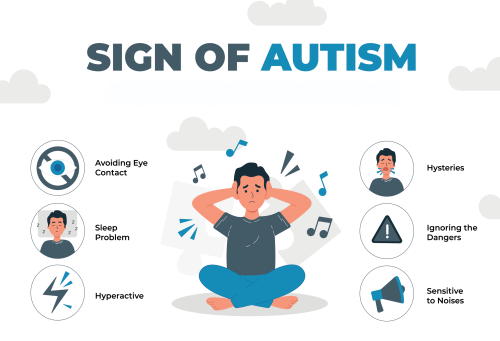
Autism Spectrum Disorder (ASD), is a neurodevelopmental condition that affects how a child understands the world, communicates, behaves, and interacts with others. It is called a “spectrum” because the signs and their intensity can vary widely—some children may have mild social differences, while others may need significant support in daily activities. Autism typically affects communication skills, social interaction, sensory processing, and behaviour patterns, often showing signs in early childhood. Children may avoid eye contact, prefer routines, have delayed speech, show repetitive behaviours, or react strongly to certain sounds, lights, or textures. Although autism is lifelong, early diagnosis, therapies, and structured support can greatly improve communication, learning, emotional development, and overall quality of life.
Symptoms of Autism:
- Social communication difficulties: Individuals with autism may struggle with making eye contact, understanding facial expressions, and initiating conversations.
- Repetitive behaviors and restricted interests: People with autism may engage in repetitive actions like rocking, lining up objects, or having a very specific focus on certain topics.
- Sensory processing differences: Individuals with autism may experience sensory overload, where sights, sounds, smells, or textures can be overwhelming.
- Challenges with nonverbal communication: Using gestures, facial expressions, and understanding body language can be difficult for some people with autism.
Is Autism Linked to Down Syndrome?
It’s important to note that autism is not a typical feature of Down syndrome. Most people with Down syndrome do not have autism. However, in the context of Autism Vs Down Syndrome, research suggests that a small percentage of individuals with Down syndrome (around 7-10%) may also be diagnosed with autism. This is known as co-occurring autism and Down syndrome.
Key Differences between Autism and Down Syndrome
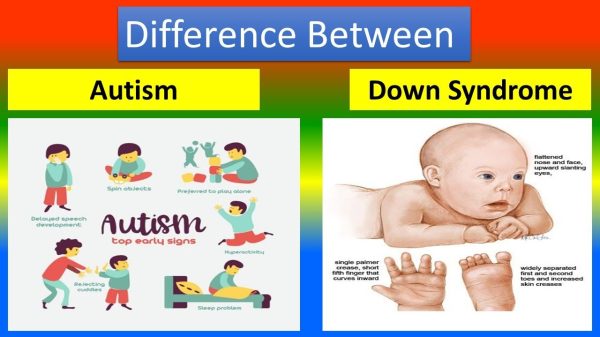
Here’s a table outlining some key differences between autism and Down syndrome:
Feature | Autism Spectrum Disorder (ASD) | Down Syndrome (DS) |
Cause | Combination of genetic and environmental factors | Extra copy of chromosome 21 |
Core Symptoms | Social communication difficulties, repetitive behaviors, sensory processing differences | Developmental challenges, such as speech and language impairments, as well as learning difficulties |
Intellectual Ability | Wide range of intellectual abilities | Typically mild to moderate intellectual disability |
Social Interaction | May struggle with social interaction | Often described as friendly and sociable |
Similarities Between Autism and Down Syndrome
- Developmental Delays: Both conditions can present with developmental delays in areas like communication, language, and social skills.
- Sensory Processing Differences: Individuals with autism and Down syndrome may experience sensory sensitivities or overstimulation.
- Benefits from Early Intervention: Early intervention programs can significantly improve outcomes for both ASD and DS.
Importance of Understanding the Differences
Understanding the distinctions between autism and Down syndrome is crucial for providing appropriate support and interventions. Each condition requires a tailored approach to address the specific challenges faced by individuals.
Early diagnosis and evidence-based therapies can significantly improve quality of life for both individuals with autism and Down syndrome.
For Parents and Caregivers:
If you suspect your child may be on the autism spectrum, know that you are not alone.We recognize that managing the complexities of special needs can be daunting. That’s why we offer a comprehensive range of autism support services and other therapies for children and adults with special needs.
Our team of qualified professionals can provide individualized assessments, therapies, and support to help your loved one thrive. Contact us today to learn more about how we can help you on this journey.
Conclusion
Autism and Down syndrome are complex conditions with unique characteristics. While they share some similarities, it’s essential to recognize the key differences to ensure individuals receive the most effective support. By fostering a deeper understanding of these conditions, we can create a more inclusive and supportive environment for everyone.