
Many parents worry when their child throws frequent tantrums, refuses to listen, or struggles with following simple instructions. These behaviors can feel overwhelming, but the good news is that they can be improved with the right approach.
Behaviour Modification is a proven method that helps shape positive behaviors in children through structured techniques and consistent guidance. Early support plays a crucial role in healthy child development, helping children build emotional, social, and communication skills.
In this guide, you’ll learn what behaviour modification is, how therapy works, and practical ways to support your child at home.
What is Behaviour Modification?
Behaviour modification is a structured psychological approach used to replace unwanted behaviors with positive, useful ones by applying proven learning principles.
Instead of focusing on why a behavior started, it focuses on what can be observed and changed in the present—a child’s actions, reactions, and daily habits.
It works on a simple idea:
Behaviors followed by positive outcomes are more likely to be repeated
Behaviors that are ignored or consistently corrected tend to decrease over time
In practice, this means encouraging good behavior through praise or rewards, while gradually reducing negative behaviors through consistent responses.
Simple Example
If a child is appreciated each time they complete their homework, they begin to connect that action with a positive result—making them more likely to repeat it.
What is Behaviour Modification Therapy for Children?
Behaviour Modification therapy is a structured and professional approach designed to help children learn appropriate behaviors in a supportive environment.
Unlike general discipline, which may be inconsistent, therapy follows a planned method tailored to each child’s needs. It focuses on improving:
Emotional control
Communication skills
Social interactions
This approach plays an important role in behaviour modification in child development, especially during the early years when learning patterns are formed.
At Nurturers, founded by Swati Suri, a special educator with over 10 years of experience, therapy programs are designed to be child-friendly, practical, and result-oriented.
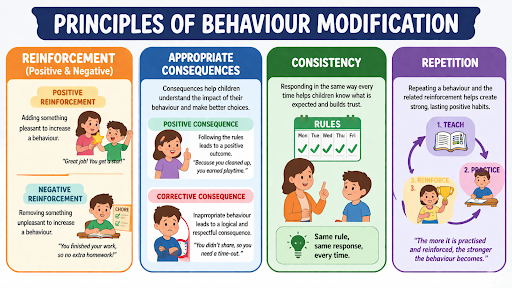
Principles of Behaviour Modification
Behaviour modification is based on simple, proven principles that help children learn and maintain positive behavior through clear guidance and consistent responses.
Reinforcement (Positive & Negative): Reinforcement is used to increase desired behavior.
Positive reinforcement means adding a reward (like praise or a small treat) when a child behaves well.
Negative reinforcement means removing something unpleasant (like repeated reminders) when the child follows instructions.
Both methods encourage children to repeat positive actions.
Appropriate Consequences: When a child shows unwanted behavior, appropriate consequences help them understand limits. This may include a short time-out or loss of a privilege. The goal is to guide, not punish, so the child learns the right behavior.
Consistency: Consistency means applying the same rules and responses every time. When expectations are clear and predictable, children understand what is expected and are more likely to follow it.
Repetition: Children learn through practice. Repeating positive behaviors regularly helps them become habits. Over time, these behaviors become natural and automatic.
In simple terms: Reward what you want to see more of, respond calmly to what you want to reduce, and stay consistent.
How Behaviour Modification Therapy Helps Children
Behaviour modification therapy supports children in developing everyday skills that make life at home, school, and social settings smoother and more positive.
Emotional Regulation
Many children struggle to manage big emotions like anger, frustration, or anxiety. Behaviour therapy teaches them how to respond calmly instead of reacting impulsively.
Example: A child who used to throw tantrums when upset may learn to take a pause, use words, or follow a calming routine instead.
Improved Communication
Some children find it difficult to express their needs, which often leads to frustration or misbehavior. Therapy helps them communicate more clearly and appropriately.
Example: Instead of crying or shouting, a child learns to say “I need help” or “I want a break.”
Better Social Skills
Children learn how to interact positively with others—such as sharing, taking turns, and respecting boundaries. These skills are important for building friendships.
Example: A child who grabs toys may learn to wait for their turn and ask politely, improving peer relationships.
Reduced Challenging Behaviors
Unwanted behaviors like aggression, refusal, or frequent tantrums are gradually reduced using structured techniques and consistent responses.
Example: A child who refuses to follow instructions may start completing small tasks when encouraged with rewards and clear expectations.
Over time, these changes help children become more confident, independent, and better adjusted in daily life—both at home and in school.
Behaviour Modification Techniques Used in Therapy
This therapy uses practical behaviour modification techniques to help children learn positive behaviors step by step. These methods are simple, structured, and effective when applied consistently.
Positive Reinforcement
Positive reinforcement means rewarding a child immediately after they show a desired behavior, so they feel motivated to repeat it. The reward can be praise, attention, or something the child enjoys.
Example: When a child completes homework on time, parents praise them or give a sticker. Over time, the child starts finishing tasks without reminders because they associate it with positive feedback.
Negative Reinforcement
Negative reinforcement means removing something unpleasant when the child behaves appropriately, which encourages them to continue that behavior. It is not punishment—it is about relief from something unwanted.
Example: A parent stops giving repeated instructions once the child starts getting ready for school on their own. The child learns that acting independently reduces pressure.
Token Economy System
This technique uses a structured reward system where children earn points, stars, or tokens for good behavior, which can later be exchanged for rewards. It helps build consistency and motivation.
Example: A child earns one star each time they follow instructions. After collecting 5 stars, they get extra playtime or a favorite activity.
Time-Out Strategy
Time-out is a short, calm break given after inappropriate behavior to help the child pause, settle down, and understand that the behavior is not acceptable. It should be used without anger or harshness.
Example: If a child hits someone, they are asked to sit quietly for a few minutes away from distractions. Afterward, they are guided on what they should do instead.
Modeling Desired Behavior
Children learn a lot by observing adults. Modeling means showing the behavior you want the child to copy, rather than only telling them what to do.
Example: Parents use polite words like “please” and “thank you” regularly, and the child gradually begins to use the same language in daily interactions.
Structured Routines
Structured routines create a predictable daily schedule, which helps children feel secure and reduces confusion or resistance. When children know what to expect, they are more likely to cooperate.
Example: Having fixed times for waking up, meals, study, and bedtime helps a child follow instructions more easily without frequent reminders.
These behavioural therapy techniques work best when used consistently and patiently, helping children gradually develop positive habits that last over time.
Role of Cognitive Behaviour Therapy (CBT)
Cognitive Behaviour Therapy (CBT) focuses on the connection between thoughts, feelings, and behavior.
It helps children:
Understand their emotions
Replace negative thinking patterns
Develop healthier responses
CBT is often combined with behaviour modification for children who need deeper emotional support.
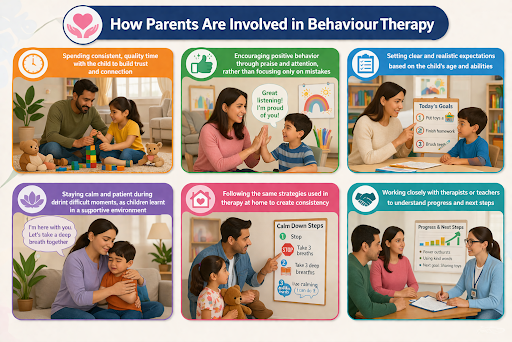
How Parents Are Involved in Behaviour Therapy
Parents play a key role in helping children learn and maintain positive behavior. What happens at home has a strong impact on how well behaviour modification therapy works.
Effective support from parents includes:
Spending consistent, quality time with the child to build trust and connection
Encouraging positive behavior through praise and attention, rather than focusing only on mistakes
Setting clear and realistic expectations based on the child’s age and abilities
Staying calm and patient during difficult moments, as children learn best in a supportive environment
Following the same strategies used in therapy at home to create consistency
Working closely with therapists or teachers to understand progress and next steps
At Nurturers, parents receive practical training and support to ensure that therapy continues beyond sessions.
Who Can Benefit from Behaviour Modification Therapy?
Behaviour modification therapy can support a wide range of children by helping them develop positive habits, improve behavior, and manage everyday challenges more effectively.
It is especially helpful for:
Children with ADHD, who may struggle with attention, impulsivity, or following instructions
Children with autism, who may need support with communication, routines, and social interaction
Children showing behavioral challenges, such as aggression, frequent tantrums, or refusal to follow rules
Children with emotional difficulties, including anxiety, frustration, or difficulty managing strong feelings
At the same time, behaviour modification is not limited to clinical conditions. It can also benefit typically developing children who may need guidance in building routines, improving listening skills, or developing better study and social habits.
In simple terms, any child who needs help with behavior, emotional control, or daily routines can benefit from this structured and supportive approach.
Tips for Successful Behaviour Modification at Home
Supporting your child at home is a key part of making behaviour modification successful. Small, everyday actions—when done consistently—can lead to lasting positive changes.
Parents can help by:
Being consistent in rules and responses
Children learn faster when expectations stay the same. If a behavior is allowed one day and corrected the next, it can create confusion. Consistency helps children understand what is expected.
Setting clear and simple expectations
Use short, easy-to-understand instructions instead of long explanations.
Example: Saying “Please put your toys away” works better than giving multiple directions at once.
Using positive reinforcement regularly
Notice and appreciate good behavior, even small efforts.
Example: Praising a child for sitting quietly or completing a task encourages them to repeat it.
Avoiding harsh punishment
Strict or negative reactions can increase fear or resistance. Calm guidance and appropriate consequences are more effective in teaching the right behavior.
Tracking progress over time
Keep an eye on improvements, no matter how small. This helps parents stay motivated and understand what strategies are working.
Staying patient and realistic
Behavior change takes time. Expect gradual progress rather than instant results, and support your child through the process.
Creating a calm, structured, and supportive environment at home makes it easier for children to learn and practice positive behaviors every day.
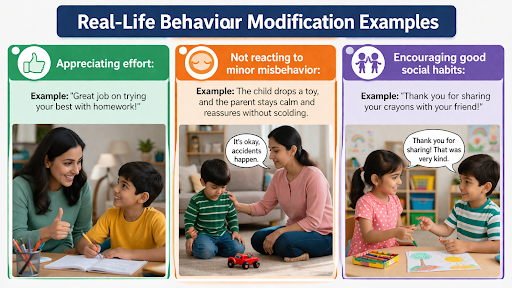
Real-Life Behaviour Modification Examples
Appreciating effort: When a child completes homework and is praised, they feel motivated to repeat the same behavior.
Not reacting to minor misbehavior: Ignoring small negative actions like whining (when appropriate) helps reduce them over time.
Encouraging good social habits: Praising a child for sharing or playing nicely reinforces positive behavior.
These small, everyday responses quietly shape a child’s behavior and help build lasting positive habits
Conclusion
Children’s behavior can be shaped positively with the right guidance, patience, and consistency. Behaviour modification therapy provides structured support to help children learn, grow, and thrive.
If you feel your child needs extra support, seeking guidance from experienced professionals—like the team at Nurturers, led by Swati Suri—can help you take the right steps at the right time.