Learning disabilities in children are neurological conditions that affect how a child processes, understands, and responds to information. These challenges commonly impact skills such as reading, writing, mathematics, and concentration.
Many parents first notice signs when their child struggles with reading, writing, or basic math despite regular practice. This is why early identification becomes important—it helps children receive the right support at the right time.
In this article by Nurturers, founded by Swati Suri, a special educator with 10+ years of experience, we will cover the types, symptoms, causes, diagnosis, and effective support strategies.
What Are Learning Disabilities in Children?
These are brain-based disorders that affect the ability to acquire, process, or use information effectively. These conditions are not linked to intelligence but to how the brain functions.
They can impact:
- Understand concepts but struggle to express them
- Reading (decoding and comprehension)
- Writing (spelling, structure, motor skills)
- Mathematics (numbers, calculations, logic)
- Find it hard to follow multi-step instructions
These challenges are lifelong, but with structured guidance and the right teaching methods, children can improve significantly and become independent learners.
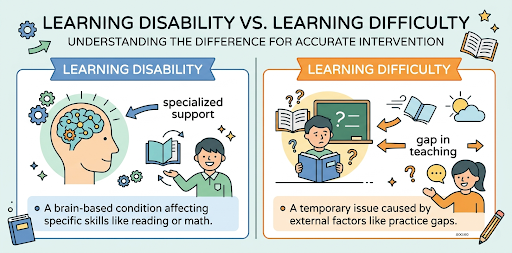
Learning Disability vs Learning Difficulty
Understanding the difference between learning difficulty and disability helps in accurate intervention:
- Learning Disability: A brain-based condition that affects specific skills and requires specialized support
- Learning Difficulty: A temporary issue caused by external factors like lack of practice, teaching gaps, or environmental changes
Types of Learning Disabilities
These conditions are not the same for every child. Each type of learning disabilities targets a specific skill area.
Major Types
- Dyslexia: A condition where a child finds it challenging to read fluently, identify words accurately, and understand written content.
- Dysgraphia: A difficulty that affects writing skills, including spelling, handwriting, and expressing ideas clearly on paper.
- Dyscalculia: Difficulty understanding numbers, calculations, and math logic
- Auditory Processing Disorder: Difficulty understanding spoken instructions or sounds.
- Visual Processing Disorder: Trouble interpreting visual information like letters or shapes.
- Nonverbal Learning Disability: Difficulty with social cues, patterns, and spatial awareness.
- Dyspraxia: Poor coordination and difficulty with physical tasks.
Symptoms of Learning Disabilities in Children
Symptoms vary depending on the age and type but generally affect academic performance and daily functioning.
Common Symptoms
- Struggles with reading, writing, or spelling
- Difficulty solving math problems
- Poor focus and attention
- Trouble following instructions or completing tasks
Early Warning Signs
- Delay in speaking or forming sentences
- Difficulty identifying letters or numbers
- Easily distracted or unable to sit for long
- Clumsiness or poor hand-eye coordination
If these signs are consistent, it’s important not to ignore them.
Causes of Learning Disabilities in Children
Many parents ask about the Causes of Learning Disabilities in Children when they first notice their child struggling in school. These conditions are not caused by laziness or lack of effort. They are linked to how the brain develops and functions — and early support can make all the difference.
Main Causes
- Genetic factors: Family history of similar challenges
- Brain development differences: Variations in how the brain processes information
- Prenatal influences: Exposure to alcohol, drugs, or infections during pregnancy
- Environmental factors: Limited early learning exposure or toxin exposure
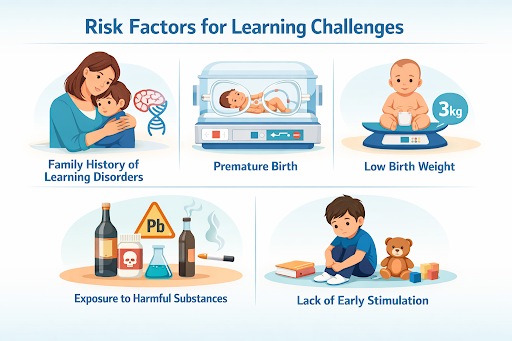
Risk Factors
Certain conditions increase the likelihood of these challenges:
- Family history of learning disorders
- Premature birth
- Low birth weight
- Exposure to harmful substances (lead, alcohol, drugs)
Lack of early stimulation and structured learning
Identification and Diagnosis
Many parents delay assessment, assuming the child will “catch up.” However, early diagnosis makes a big difference.
How to Identify
- Continuous academic struggles despite effort
- Teacher observations and feedback
- Difficulty keeping up with classmates
Diagnosis Process
- Detailed evaluation by a psychologist or special educator
- Standardized learning and cognitive assessments
- Input from therapists if required
At Nurturers, assessments are designed to understand each child’s unique learning pattern, not just label the problem.
Support and Management
Managing these conditions requires a structured and consistent approach focused on skill development. The right support system can completely change a child’s learning journey.
Treatment Approach
- These conditions do not have a one-time cure
- Progress depends on consistent and early intervention
Support Strategies
- Customized special education programs
- Speech and occupational therapy (if needed)
- Individualized learning plans based on strengths
- Classroom modifications like extra time and simplified instructions
At Nurturers, programs are designed to build confidence along with academic skills, ensuring long-term improvement.
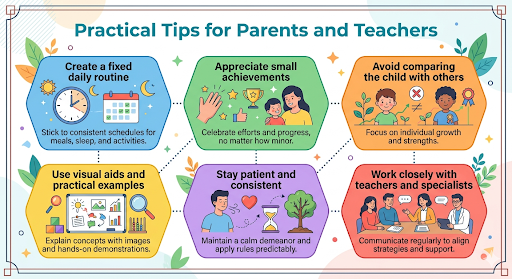
Tips for Parents and Teachers
- Keep instructions short and clear
- Create a fixed daily routine
- Appreciate small achievements
- Avoid comparing the child with others
- Use visual aids and practical examples
- Stay patient and consistent
- Work closely with teachers and specialists
Small, consistent efforts create meaningful progress over time.
FAQs
What are learning disabilities in children?
They are brain-based conditions that affect how a child reads, writes, understands, or processes information, despite having normal intelligence.
How can I identify a learning disability in my child?
You can identify it through consistent academic struggles, difficulty following instructions, delayed learning milestones, and feedback from teachers. A professional assessment is recommended for confirmation.
What are the most common types of learning disabilities?
The most common types include dyslexia (reading), dysgraphia (writing), and dyscalculia (math), along with processing disorders that affect how information is understood.
Can learning disabilities be cured?
They cannot be cured, but they can be effectively managed with early intervention, special education, and structured support.
When should I seek help for my child?
You should seek help when your child shows ongoing difficulty in reading, writing, or understanding concepts compared to their age group.
What support does Nurturers provide for children with learning disabilities?
Nurturers offers personalized assessments, special education programs, and expert-guided intervention plans tailored to each child’s needs.
Conclusion
These conditions require understanding, patience, and the right support. When identified early, children can overcome challenges and develop strong learning skills.
With expert guidance from platforms like Nurturers and experienced professionals like Swati Suri, children receive the support they need to grow confidently and succeed academically.