Sensory overload is a significant and often overlooked challenge in children with Autism Spectrum Disorder (ASD) and Attention Deficit Hyperactivity Disorder (ADHD). Many children experience the world more intensely than others, which can make everyday environments feel overwhelming and unsafe. Classrooms, playgrounds, shopping malls, family gatherings, or even home routines can trigger distress when sensory input becomes too much for the nervous system to handle. Recognizing sensory overload early allows parents and caregivers to respond with empathy, reduce stress, and seek timely therapeutic support. At Nurturers, understanding sensory needs is considered a foundational step toward meaningful progress.
What Is Sensory Overload?
Sensory overload occurs when the brain receives more sensory information than it can process effectively. The nervous system becomes overstimulated, leading to emotional, behavioral, and physical reactions. Children with autism and ADHD often have differences in sensory integration, meaning their brains process sounds, sights, touch, movement, taste, or smells differently. This overload is not intentional behavior or poor discipline—it is a neurological response beyond the child’s control.
Sensory overload can affect one sensory system or multiple systems at the same time, which increases the intensity of the child’s reaction.

Why Sensory Overload Is Common in Autism and ADHD?
Sensory processing differences are a core characteristic of autism and are frequently present in ADHD as well. The brain may struggle to filter irrelevant sensory information, making it difficult for the child to focus, remain calm, or regulate emotions. Common reasons include:
- Heightened sensitivity to sounds, lights, textures, or movement.
- Difficulty filtering background noise or visual clutter.
- Reduced ability to shift attention away from overwhelming stimuli.
- Immature or dysregulated nervous system responses.
- Increased anxiety, which further amplifies sensory reactions.
Although autism and ADHD are distinct conditions, sensory overload often overlaps, making professional evaluation essential for accurate support planning.
Early Warning Signs of Sensory Overload
Sensory overload rarely appears suddenly. There are usually early signs that indicate the child is becoming overwhelmed. Recognizing these signals early helps prevent meltdowns and shutdowns. Common early warning signs include:
- Covering ears or eyes.
- Squinting, blinking excessively, or turning away.
- Increased fidgeting or restlessness.
- Sudden irritability or mood changes.
- Avoidance of touch or certain environments.
- Complaints of headaches or stomach discomfort.
- Increased breathing rate or visible tension.
These signs indicate that the child’s sensory threshold is being exceeded and immediate support is needed.
Behavioral Signs Parents and Teachers Often Notice
As sensory overload intensifies, behavioral reactions become more visible. These behaviors are often misunderstood as tantrums or defiance, but they are stress responses. Behavioral indicators may include:
- Crying, screaming, or emotional outbursts.
- Aggression such as hitting, pushing, or throwing objects.
- Refusal to follow instructions or participate in activities.
- Freezing, shutting down, or becoming unresponsive.
- Running away or attempting to escape the environment.
- Increased rigidity and resistance to changes.
Understanding the sensory cause behind these behaviors helps adults respond calmly instead of reactively.
Types of Sensory Sensitivities
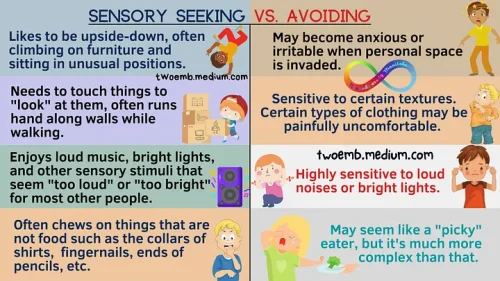
Children with autism and ADHD may experience hypersensitivity (over-responsiveness) or hyposensitivity (under-responsiveness) to sensory input. Common sensory challenges include:
- Auditory: Children may be highly sensitive to loud noises, sudden sounds, or overlapping voices. Everyday sounds such as school bells, traffic, fans, or group conversations can feel distressing.
- Visual: Bright lights, fast-moving visuals, or visually cluttered environments can be overwhelming. Classrooms with decorations, screens, or constant movement may increase discomfort and distractibility.
- Tactile: Touch sensitivity may cause discomfort with certain clothing textures, tags, seams, or fabrics. Some children strongly resist grooming activities such as haircuts or nail trimming, while others avoid messy play or physical contact.
- Vestibular: Vestibular challenges affect balance and movement processing. Some children may fear swings, slides, or climbing activities, while others constantly seek movement through spinning, jumping, or rocking.
- Olfactory and Taste: Strong reactions to smells or food textures are common. Certain odors may trigger nausea, headaches, or distress, while food sensitivities may lead to selective eating.
Each child has a unique sensory profile, meaning triggers, sensitivities, and regulation needs vary from child to child.
Common Sensory Triggers in Daily Life
Sensory overload can be triggered by situations that appear ordinary to others but feel intense and overwhelming to a child with sensory processing differences. These triggers can occur at home, school, or in public places and often build up gradually until the child reaches a breaking point. Common sensory triggers include:
Crowded classrooms or noisy playgrounds: Multiple conversations, shouting, and constant movement can overwhelm the auditory and visual systems. Children may struggle to focus, become anxious, or attempt to escape the environment.
School assemblies and social gatherings: Large groups, amplified sounds, unpredictable routines, and close physical proximity often increase sensory stress. Many children show signs of distress before or after such events.
Bright lights or decorated rooms: Harsh lighting, colorful displays, and visual clutter can overload the visual system. This is especially challenging in classrooms, malls, or event spaces with excessive stimulation.
Sudden changes in routine: Unexpected schedule changes can increase sensory and emotional overload. When predictability is lost, children may feel unsafe and react with anxiety or resistance.
Identifying these triggers helps parents and therapists anticipate challenges and plan effective coping strategies.
Impact of Sensory Overload on Learning and Development
When sensory overload is frequent, it can significantly affect a child’s development. Learning becomes difficult when the brain is focused on survival rather than attention and comprehension. Possible impacts include:
- Reduced attention and concentration in class
- Difficulty following instructions
- Avoidance of social interaction
- Increased anxiety and emotional dysregulation
- Lower confidence and self-esteem
- Resistance to school or therapy settings
Early intervention helps reduce these challenges and supports long-term emotional well-being.
When to Seek Professional Help?
If sensory overload is affecting daily routines, learning, or emotional regulation, professional assessment is highly recommended. Occupational therapy plays a key role in identifying sensory processing challenges and teaching regulation strategies. Parents should consider seeking help if:
- Meltdowns or shutdowns occur frequently
- The child avoids school or social situations
- Sensory reactions are intense or worsening
- Daily functioning becomes difficult
Early therapy allows children to build coping skills before challenges escalate.
How Nurturers Support Children with Sensory Overload?
At Nurturers, sensory challenges are addressed through individualized occupational therapy programs using evidence-based sensory integration techniques. Therapy focuses on helping children understand their sensory needs, regulate their nervous systems, and respond more comfortably to their environment. Support at Nurturers includes:
- Sensory integration therapy
- Play-based regulation activities
- Structured routines and calming strategies
- Parent guidance and home-based sensory planning
- Collaboration with other therapists when needed
The approach is compassionate, child-centered, and focused on long-term independence.
Conclusion
Sensory overload in autism and ADHD is a real and deeply impactful experience, not a behavioral issue or lack of discipline. Early warning signs provide valuable insight into a child’s internal struggle. With timely recognition, supportive environments, and professional intervention, children can learn to manage sensory input more effectively. At Nurturers, the goal is to help children feel safe, regulated, and confident—allowing them to participate fully in learning, relationships, and everyday life.