Autism, also called Autism Spectrum Disorder (ASD), is a developmental condition that affects how a person communicates, interacts with others, and understands the world around them. It is described as a spectrum because the characteristics and support needs can vary widely from one individual to another.
Some children may show differences in communication, behavior, or social interaction from an early age. Recognizing these differences early can help parents seek the right guidance and support.
At Nurturers, founded by Swati Suri, a special educator with more than 10+ years of experience, families receive professional support and therapy programs designed to help children build communication, learning, and social skills.
What is Autism?
Autism is a neurodevelopmental condition, which means it relates to how the brain develops and functions during early childhood.
Children on the spectrum may process information, communicate, or interact socially in ways that differ from their peers. For example, some children may have difficulty understanding social cues, while others may prefer routines or show strong interest in specific activities.
Because autism exists on a spectrum, every individual has unique strengths and challenges. Some may require more support in daily life, while others may develop strong abilities in areas such as memory, creativity, or focused interests.
Understanding autism helps families, educators, and therapists create supportive environments where children can grow and learn effectively.
What Do You Mean by Autism?
When people ask what do you mean by autism, they are usually referring to a developmental condition that influences how a person communicates, interacts socially, and behaves.
Autism can affect several areas of development, including:
- Social interaction and relationships
- Communication and language skills
- Behavior patterns and routines
- Sensory responses to the environment
For example, a child on the spectrum might find it difficult to start conversations, interpret facial expressions, or adjust to sudden changes in routine. These differences are related to how the brain processes information and do not determine a child’s intelligence or future potential.
Is Autism a Disease?
Autism is not considered a disease or illness. It is not something that can spread from one person to another.
Instead, it is a lifelong developmental condition linked to differences in brain development. The goal of therapy and support programs is not to “cure” the condition but to help individuals develop communication skills, independence, and confidence.
Many individuals on the spectrum lead meaningful and productive lives when they receive appropriate support.
Why Autism Happens
Researchers are still studying why autism happens, and there is no single cause that explains every case.
Most experts believe that autism develops because of a combination of genetic and environmental factors that influence early brain development.
These factors may affect how nerve cells in the brain communicate with each other, which can influence behavior, learning, and social interaction.
Is Autism a Genetic Disorder?
Research suggests that inherited factors may influence the development of autism in some individuals. Studies show that children who have relatives with autism or other developmental conditions may have a higher likelihood of being on the spectrum.
However, autism is usually not caused by a single gene. Instead, researchers believe that multiple genes and environmental influences interact to affect brain development.
Early Signs and Stages of Autism
Early identification of developmental differences can help families access support and therapy programs sooner. The signs may appear gradually and can vary from child to child.
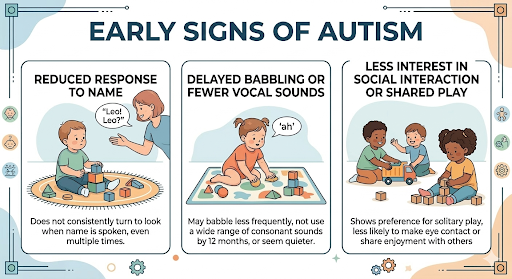
Some early indicators may appear during the first year of life. These may include:
- Limited eye contact with caregivers
- Reduced response when their name is called
- Delayed babbling or fewer vocal sounds
- Less interest in social interaction or shared play
These behaviors do not automatically indicate autism, but they may suggest the need for developmental monitoring.
Early Signs of Autism in Toddlers
As children grow into the toddler stage, some developmental differences may become more noticeable.
Common signs may include:
- Delayed speech or limited vocabulary
- Repetitive movements such as spinning or hand motions
- Difficulty engaging in interactive play
- Limited use of gestures like pointing or waving
Early screening by a pediatrician can help determine whether further evaluation is needed.
Autism Symptoms in Young Children
Some common autism symptoms in young children include:
- Challenges in communication and language development
- Repetitive behaviors or strong preference for routines
- Strong reactions to certain sensory experiences such as loud sounds, bright lights, or specific textures
The intensity of these characteristics can vary widely between individuals.
How Does a Child with Autism Behave?
Children with autism may behave differently because they process information and sensory experiences in unique ways.
Understanding these behaviors helps caregivers respond with patience and appropriate support.
Social Interaction Challenges
Children on the spectrum may find it difficult to understand social cues or body language. For example, they may:
- Avoid eye contact
- Prefer playing alone
- Have difficulty understanding emotions or facial expressions
Communication Difficulties
Language development may occur at a different pace. Some children may:
- Begin speaking later than their peers
- Use fewer words or gestures
- Repeat words or phrases they hear in conversations
With supportive communication strategies and therapy, many children gradually develop stronger communication skills.
Repetitive Behaviors
Some children display repetitive actions or routines that help them feel comfortable or manage sensory input.
Examples include:
- Hand flapping
- Rocking back and forth
- Repeating the same activities frequently
These behaviors often provide a sense of predictability and comfort.
Diagnosis of Autism Spectrum Disorder
Identifying autism typically involves a combination of developmental screening and professional evaluation.
Developmental Screening
Pediatricians often monitor developmental milestones during routine checkups. These screenings help identify differences in communication, learning, and behavior.
If any concerns arise, a more detailed assessment may be recommended.
Medical and Psychological Evaluation
A detailed assessment is usually carried out by specialists like developmental pediatricians, psychologists, or trained therapists.These specialists observe the child’s communication, behavior, and developmental progress to better understand their needs.
What is Autism Diagnostic Observation Schedule (ADOS)?
The Autism Diagnostic Observation Schedule (ADOS) is a structured assessment used by specialists when evaluating children for autism.
During the assessment, professionals observe how a child communicates, interacts socially, and responds to various activities designed to evaluate developmental skills.
Risk Factors for Autism
Although autism does not have a single cause, certain factors may increase the likelihood of developmental differences.
Genetic Factors
A family history of developmental conditions may increase the chances of a child being on the spectrum.
Environmental Factors
Some environmental influences may affect early brain development, including:
- Premature birth
- Advanced parental age
- Pregnancy complications
What Causes Autism During Pregnancy?
Many parents ask what causes autism during pregnancy. Researchers have studied several possible influences, such as maternal infections, certain medications, and complications affecting early brain development.
These factors may contribute to understanding why autism happens, although the exact cause remains complex.
Treatment for Autism
Although autism itself does not have a cure, autism treatment in India through therapies can help children develop essential life skills.
Behavioral Therapy
Approaches such as Applied Behavior Analysis (ABA) focus on improving learning, communication, and social skills through structured activities.
Speech Therapy
Speech therapy helps children strengthen their ability to communicate, understand language, and express their thoughts or needs effectively.
Occupational Therapy
Occupational therapy focuses on improving everyday skills such as motor coordination, self-care routines, and sensory processing.
Medication
Doctors may sometimes recommend medication to manage related challenges such as anxiety, attention difficulties, or sleep problems.
Parents often ask can autism be treated or can autism be cured. While the condition itself is lifelong, therapy and supportive learning environments can greatly improve development and independence.
What is High Functioning Autism?
High functioning autism is a term sometimes used to describe individuals who have average or above-average intelligence but still experience challenges with social communication.
These individuals may succeed academically or professionally while finding certain social interactions more difficult.
What Does Autism Look Like in Adults?
Autism continues into adulthood, although many individuals develop strategies to manage challenges effectively.
Social Interaction Challenges
Adults may find it difficult to interpret subtle social cues or maintain conversations in unfamiliar settings.
Sensory Sensitivities
Some individuals experience heightened reactions to sensory experiences such as noise, lighting, or crowded environments.
Difficulty in Relationships and Workplace
Understanding expectations in social relationships or professional environments may sometimes require additional support or accommodations.
Tips for Parents of Children with Autism
Supporting a child with developmental differences can feel overwhelming, but the right strategies can make a significant difference.
Seek Early Guidance
If you notice developmental delays or social communication challenges, consulting a professional early can help identify the best support options.
Establish Consistent Routines
Predictable daily schedules help children feel secure and make transitions between activities easier.
Encourage Communication
Allow children to express themselves in different ways, including speech, gestures, pictures, or communication devices.
Provide Emotional Support
Patience, encouragement, and understanding help children build confidence and feel supported.
Join Support Communities
Connecting with other parents and professionals can provide helpful guidance and emotional support.
At Nurturers, Swati Suri works closely with families to design personalized therapy programs that help children develop communication, independence, and confidence.
Can an Autistic Person Have a Normal Life?
Yes. Many individuals on the spectrum lead independent and fulfilling lives. With appropriate support, education, and opportunities to develop their strengths, they can succeed in many areas of life.
Can Kids with Autism Live a Normal Life?
Children with autism can grow into confident adults when they receive early intervention, supportive education, and encouragement from family members.
Faqs
What are the early signs of autism in toddlers?
Early signs may include delayed speech, limited eye contact, repetitive movements, and difficulty engaging in social interaction.
What is autism diagnostic observation schedule?
The Autism Diagnostic Observation Schedule (ADOS) is a structured assessment used by specialists to evaluate communication, behavior, and social interaction during the diagnostic process.
Can autism be cured?
Autism is a lifelong developmental condition and currently does not have a cure. However, therapy and support programs can help individuals develop important life skills.
Can autism be treated?
Yes. Many individuals benefit from therapies such as behavioral therapy, speech therapy, and occupational therapy.
Is autism a genetic disorder?
Research suggests that genetics may play a role, although autism usually develops due to a combination of genetic and environmental factors.
Conclusion
Autism is a developmental condition that influences communication, behavior, and social understanding. Every individual on the spectrum has unique strengths and challenges.
With early identification, supportive therapies, and family involvement, children can develop important life skills and build fulfilling lives. Organizations like Nurturers, led by Swati Suri, help families access the guidance and support needed to nurture a child’s potential.