Attention Deficit Hyperactivity Disorder (ADHD) and Autism Spectrum Disorder (ASD) are two of the most common developmental conditions in children. While they are different in many ways, research shows that ADHD and autism often overlap, with many children experiencing traits of both. This overlap can make it difficult for parents and teachers to clearly distinguish between the two, since signs like difficulties with attention, impulsivity, social interaction, and communication challenges may appear similar.
Understanding the difference between ADHD and autism is the first step toward recognizing when a child may have one or both conditions. Children with autism usually struggle more with social communication, repetitive behaviors, and sensory sensitivities, while children with ADHD often face challenges related to focus, hyperactivity, and self-control. However, when ADHD and autism occur together, the symptoms can intensify, making daily life more challenging for the child and family.
What is Autism?
Autism Spectrum Disorder (ASD) is a neurodevelopmental condition that shapes how a child communicates, learns, and experiences the world. The “spectrum” means autism looks very different from child to child — some may need significant daily support, while others function independently but still face social or sensory challenges. Children with autism may have unique strengths, such as strong memory, exceptional focus on interests, or visual-spatial talents, alongside challenges in communication and social interaction. Early identification is key. The sooner autism is recognized, the earlier children can receive interventions like speech therapy, occupational therapy, and special education support — all of which help build independence and confidence.
Signs of Autism in Children
Some of the most common signs include:
- Difficulty engaging in back-and-forth conversations.
- Limited or no eye contact.
- Repetitive movements such as hand-flapping or rocking.
- Fixation on routines or specific interests.
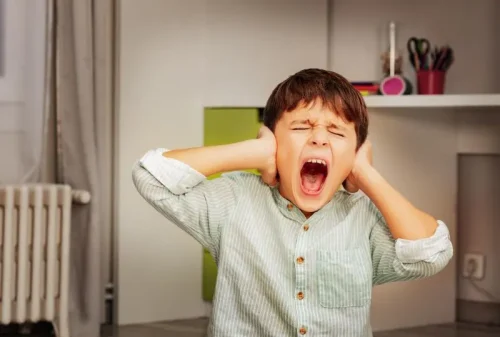
- Sensory differences (being very sensitive or under-sensitive to sounds, lights, textures, or tastes).
- Delayed speech or using language differently (such as repeating phrases or scripting lines from shows).
It’s important to note that not every child shows all signs, and some autistic children mask their traits by copying peers. That’s why professional evaluation is essential.
What is ADHD?
Attention-Deficit/Hyperactivity Disorder (ADHD) is a common neurodevelopmental condition that affects a child’s ability to manage attention span, impulse control, and self-regulation. It is not about laziness or bad behavior — rather, it reflects differences in how the brain develops and processes attention and activity levels.
- Inattentive Type – children may seem dreamy, forgetful, lose track of instructions, or have trouble staying focused on tasks that don’t interest them.
- Hyperactive-Impulsive Type – children may be constantly on the move, fidgeting, talking a lot, or acting before thinking, which can sometimes cause accidents or disrupt class.
- Combined Type – the most common type, where children show features of both inattentiveness and hyperactivity/impulsivity.
Unlike autism, ADHD is not primarily about social differences but about managing attention and behavior. However, these challenges can spill into academic performance, friendships, and daily routines.

Signs of ADHD in Children
Key indicators of ADHD include:
- Struggling to stay seated or still.
- Talking excessively or interrupting others.
- Difficulty finishing tasks or following instructions.
- Frequently losing items like books or toys.
- Seeming not to listen, even when spoken to directly.
- Acting before thinking, leading to accidents or rule-breaking.
Since many children are naturally energetic or easily distracted, ADHD is only diagnosed when these behaviors are much more frequent, intense, and disruptive compared to peers.
Common Overlapping Symptoms of Autism and ADHD
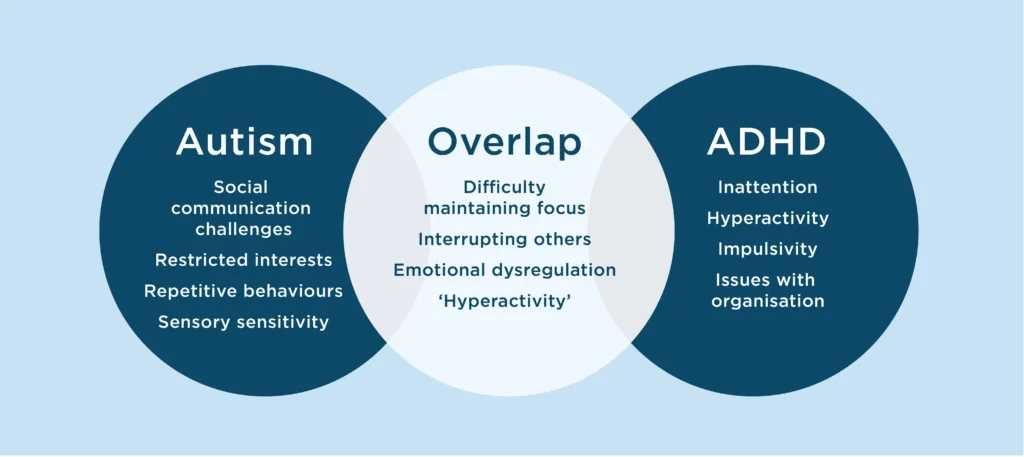
Parents often wonder about the ADHD and autism difference, but in reality, there is a strong ADHD and autism overlap. Children with both conditions may show:
- Trouble focusing on tasks that don’t interest them.
- Difficulty shifting between activities or adapting to change.
- Challenges with emotional regulation (meltdowns, frustration, or anxiety).
- Social misunderstandings, such as interrupting, not noticing personal space, or missing body language cues.
- Sleep disturbances and sensory sensitivities.
This overlap can make it harder for teachers and parents to know whether a child’s behavior points to autism, ADHD, or both.
Why ADHD and Autism Overlap in Kids?
The autism and ADHD difference is clear in theory, but research shows that about half of children with autism also meet criteria for ADHD. Several reasons explain this overlap:
- Shared Genetics – Studies show a strong hereditary component. Families with one child diagnosed with autism or ADHD often have another relative with a related condition.
- Brain Development Pathways – Both conditions involve differences in brain regions responsible for attention, executive functioning, and social processing.
- Environmental Factors – Prenatal influences (such as maternal stress or exposure to certain substances), low birth weight, or early developmental differences may increase risks.
- Diagnostic Recognition – Previously, clinicians were not allowed to diagnose ADHD and autism together. Now, both can be recognized, which has increased awareness of how often they co-occur.
The takeaway: overlap is not unusual, and recognizing it allows children to get more personalized, effective care.
How Therapists Diagnose Both Conditions Together
Diagnosing one condition is challenging enough — diagnosing both requires thorough evaluation. Here’s how professionals usually proceed:
- Developmental History – Collecting detailed background from parents about speech, motor skills, social milestones, and behavior patterns.
- Behavioral Reports – Teachers’ feedback is crucial, as symptoms often show differently at home and school.
- Screening Tools – Standardized questionnaires such as the Childhood Autism Rating Scale (CARS) or ADHD Rating Scales.
- Direct Observation – Watching the child in structured and unstructured settings.
- Multidisciplinary Teamwork – Collaboration between pediatricians, psychologists, occupational therapists, and speech therapists to ensure accuracy.
Because autism and ADHD share symptoms, professionals carefully distinguish whether a behavior stems from one condition, both, or another factor (such as anxiety or learning difficulties).

Practical Ways to Help at Home and School
Whether your child has autism, ADHD, or both, support at home and school can make a big difference:
- Consistency and Structure – Visual schedules, predictable routines, and clear rules reduce stress.
- Classroom Accommodations – Extra time on tasks, sensory breaks, and preferential seating help both ADHD and autism learners.
- Therapies – Speech therapy, occupational therapy, and behavioral therapy can target overlapping and distinct challenges.
- Parent Training – Learning behavior management and positive reinforcement techniques.
- Strength-Based Approach – Focusing on the child’s unique interests (like art, technology, or memory skills) to boost self-esteem.
What is the Difference Between ADHD and Autism?
Understanding the difference between ADHD and autism can sometimes feel confusing for parents, since both conditions share overlapping traits like inattention, impulsivity, or social challenges. To summarize the difference between ADHD and autism:
- ADHD is about regulation of attention and behavior.
- Autism is about differences in social communication and sensory/behavioral patterns.
However, many children don’t fit neatly into one box. That’s why understanding the autism and ADHD difference is helpful, but focusing on your child’s strengths and struggles is far more important.
Final Thoughts: Support at Nurturers
At Nurturers, Noida, we understand the complexities of ADHD and autism overlap. Our multidisciplinary team creates personalized therapy plans that may include speech therapy, occupational therapy, behavior management, and parent guidance. We believe in empowering families with tools and strategies to support their child’s development, learning, and emotional well-being.
If you’re unsure whether your child shows signs of ADHD, autism, or both, early screening can provide clarity and peace of mind.