Occupational therapy rooms play a crucial role in transforming the learning experience for special children by providing a structured, engaging, and sensory-friendly environment. These specially designed spaces are equipped with essential occupational therapy equipment such as swings, balance boards, sensory mats, and fine motor tools that help children develop coordination, focus, and confidence. Through a variety of occupational therapy activities, children learn to manage sensory challenges, improve motor skills, and enhance their ability to participate in daily tasks both in school and at home.
At Nurturers, our occupational therapy room in Noida is thoughtfully created to support holistic development, combining speech and occupational therapy approaches to address individual needs. By catering to different types of occupational therapy, our center ensures that every child receives personalized care that nurtures their strengths and promotes independence. Ultimately, these therapy rooms don’t just aid learning — they empower special children to thrive emotionally, socially, and academically.
What Is an Occupational Therapy Room?
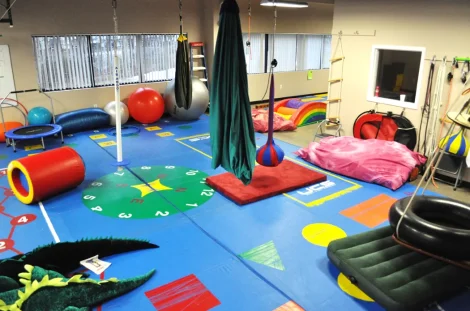
An occupational therapy room is a safe, stimulating, and therapeutic space designed to help children develop essential motor, sensory, cognitive, and emotional skills. It provides a structured yet flexible environment where therapists guide children through activities tailored to their individual needs.Unlike a typical classroom, an occupational therapy room is interactive and hands-on. It includes equipment that encourages movement, sensory play, problem-solving, and creativity — all crucial for child development.
At Nurturers, our therapy rooms are child-friendly, colorful, and sensory-safe. Each area is carefully set up to support specific goals — whether it’s balance and coordination, fine motor skills, emotional regulation, or focus.
Why Occupational Therapy Is Important for Special Children?
Occupational therapy focuses on enabling children to perform daily activities independently and confidently. For special children — including those with Autism Spectrum Disorder (ASD), ADHD, Cerebral Palsy, Down Syndrome, and sensory processing difficulties — it plays a crucial role in bridging the gap between learning and living.
Key benefits of occupational therapy include:
- Improved Fine and Gross Motor Skills: Strengthening muscles and enhancing coordination for everyday activities like dressing, writing, and eating.
- Better Sensory Integration: Helping children process sensory inputs (sound, touch, sight, smell) effectively without getting overwhelmed.
- Enhanced Focus and Attention: Supporting classroom learning by improving concentration and reducing hyperactivity.
- Boosted Emotional Control: Teaching children coping mechanisms to manage frustration, anxiety, and overstimulation.
- Greater Independence: Encouraging self-help skills that promote confidence and autonomy in daily routines.
Through structured occupational therapy activities, children learn to adapt to their environment, participate in school activities, and communicate better — all of which contribute to overall Special Child Development.
Types of Occupational Therapy
Occupational therapy is a broad field that encompasses several specializations. Understanding the types of occupational therapy helps parents and educators identify which approach best supports a child’s unique needs:
1. Sensory Integration Therapy
This type of therapy focuses on helping children with sensory processing difficulties. Many special children struggle with hypersensitivity (overreaction) or hyposensitivity (underreaction) to sensory input. Sensory integration therapy uses controlled sensory experiences — like swinging, textured play, and movement — to help children regulate their responses and improve focus.
2. Fine Motor Therapy
Fine motor therapy targets the small muscles in the hands and fingers. Activities such as bead threading, using tweezers, or puzzles help improve grip, coordination, and handwriting. It’s vital for school readiness and daily independence.
3. Gross Motor Therapy
This therapy emphasizes large muscle movements and coordination. Activities like jumping, balancing, or climbing strengthen the child’s posture, endurance, and overall body control.
4. Visual-Perceptual and Cognitive Therapy
These activities train the brain to better interpret visual information, supporting reading, problem-solving, and spatial awareness — essential skills for academic success.
5. Emotional and Behavioral Regulation Therapy
Children learn to identify and manage emotions, develop coping strategies, and handle transitions or challenges calmly and confidently. Each of these types of occupational therapy works together to ensure that children receive comprehensive developmental support tailored to their abilities.

The Role of Occupational Therapy Equipment
The magic of an occupational therapy room lies in its setup. The space is filled with diverse and safe occupational therapy equipment designed to enhance different developmental domains. Here are some of the key tools commonly found in Nurturers’ therapy rooms:
- Therapy Swings: Promote balance, core strength, and vestibular system regulation.
- Trampolines: Help improve coordination, endurance, and sensory input through controlled jumping.
- Climbing Walls and Ladders: Encourage body awareness, strength, and risk-taking in a safe environment.
- Sensory Mats and Tactile Boards: Offer different textures to stimulate touch sensitivity and improve sensory discrimination.
- Weighted Blankets and Vests: Provide deep pressure input that calms anxiety and enhances body awareness.
- Fine Motor Kits: Include pegboards, threading tools, and puzzles that improve dexterity and hand control.
- Therapy Balls: Build posture, balance, and muscle tone while adding fun movement-based learning.
The combination of these occupational therapy equipment elements creates a multi-sensory learning experience that keeps children engaged while developing critical skills.
Effective Occupational Therapy Activities
At Nurturers, we believe that therapy should feel like play. Our therapists use a variety of occupational therapy activities designed to target specific developmental goals while keeping sessions enjoyable and motivating for children.
Here are some examples:
- Sensory Play Activities: Using sand, rice, slime, or water beads to stimulate touch and improve sensory processing.
- Obstacle Courses: Encouraging children to crawl, jump, and climb, improving strength and coordination.
- Handwriting Exercises: Strengthening finger muscles and hand-eye coordination for better pen control.
- Balance Games: Activities involving balance boards or stepping stones to enhance body control.
- Art and Craft Projects: Boost creativity while improving grip strength and focus.
- Buttoning and Zipping Tasks: Encouraging independence through self-care skill development.
- Role-Playing and Social Games: Promoting communication, turn-taking, and emotional understanding.
Each session is individualized, ensuring that every child works on activities suited to their developmental level and learning style.
Speech and Occupational Therapy in Noida
At Nurturers, we offer both speech and occupational therapy in Noida to support the comprehensive growth of special children. These two therapies complement each other beautifully.
- Occupational therapy focuses on sensory and motor skills — helping children regulate their bodies, focus, and engage in learning.
- Speech therapy builds communication, language, and social interaction skills.
When combined, they create a strong foundation for overall development. For example, a child working on fine motor skills for holding a pencil may also benefit from speech exercises that enhance oral-motor control — both contributing to better learning outcomes.
This integrated approach ensures that no aspect of a child’s development is overlooked. At Nurturers, our multidisciplinary team collaborates closely to provide personalized therapy plans for each child, ensuring measurable progress and positive change.
How Occupational Therapy Rooms Transform Learning?
An occupational therapy room is not just a place for therapy sessions — it’s an environment that transforms how special children learn and interact. By focusing on sensory, physical, and emotional balance, these rooms help children learn more effectively and joyfully. Here’s how:
- Improves Focus and Attention
The structured environment minimizes distractions and helps children concentrate better on tasks. - Enhances Learning Through Movement
Unlike static classrooms, therapy rooms encourage movement, making learning more experiential and memorable. - Promotes Emotional Regulation
Children learn to recognize emotions, calm themselves, and handle frustration effectively — improving behavior and participation. - Builds Independence and Confidence
Regular practice of self-help activities empowers children to manage daily routines without constant assistance. - Encourages Social Skills
Group activities within the therapy room foster cooperation, empathy, and communication — crucial for classroom success. - Supports Academic Readiness
By improving handwriting, sitting tolerance, attention span, and cognitive processing, children become more prepared for academic learning.
Ultimately, occupational therapy rooms create a nurturing ecosystem where learning feels natural, engaging, and rewarding.
The Nurturers’ Approach: A Step Beyond Therapy
At Nurturers, we believe every child deserves the chance to reach their full potential. Our occupational therapy room is more than a clinical space — it’s a world of sensory exploration, creativity, and emotional growth.
Our trained therapists use evidence-based techniques and child-centric approaches to design personalized therapy plans. By regularly assessing progress and collaborating with parents and educators, we ensure that therapy translates into real-life improvements at home and school.We also provide parent guidance sessions to help families continue therapy goals outside the center, ensuring consistent progress in Special Child Development.
Final Thoughts
An occupational therapy room is not merely a physical setup — it’s a gateway to learning, confidence, and independence for special children. Equipped with specialized occupational therapy equipment and designed for purposeful occupational therapy activities, it provides a structured yet playful space where children can thrive. At Nurturers, we take pride in offering integrated speech and occupational therapy in Noida that nurtures every aspect of a child’s growth — from sensory processing to emotional expression and academic readiness. Because every child is unique, and with the right support and environment, every child can learn, grow, and shine.