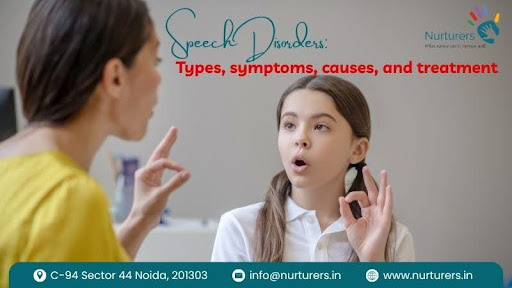
Communication is at the heart of how we connect, learn, and grow. According to the American Speech-Language-Hearing Association (ASHA), millions of people worldwide experience a speech disorder at some point in their lives. A speech disorder refers to difficulty producing sounds correctly, fluently, or with a clear voice. It can affect both children and adults, often impacting confidence and daily interactions. In this guide, we’ll explore different types, symptoms, causes, and effective treatments—so you know when and how to seek the right support.
What Is a Speech Disorder?
A speech disorder is a condition that affects a person’s ability to produce sounds clearly, fluently, or with the right voice quality. It can make communication difficult to understand and may impact daily interactions.
In simple terms, if someone struggles with how words sound—whether it’s incorrect pronunciation, stuttering, or voice issues—it may be considered a speech-related condition. These challenges can appear in both children and adults, and they vary in severity from mild to more noticeable difficulties.
Early identification is important, as the right support can significantly improve communication skills over time.
What Are the Types of Speech Disorders?
Understanding different speech disorders types helps in identifying the exact challenge and choosing the right support. Each condition affects communication in a unique way and may be seen in children, adults, or both.
Stuttering (Fluency Disorder): This involves disruptions in the flow of speech, such as repeating sounds (“b-b-ball”), stretching sounds, or getting stuck before speaking. It is one of the most common conditions in children, though it can continue into adulthood if not addressed early.
Childhood Apraxia of Speech (Apraxia): Apraxia is a motor planning disorder where the brain has difficulty coordinating the movements needed for speaking. Children know what they want to say, but their mouth muscles don’t move correctly to form words. It is primarily seen in early development and requires specialized therapy.
Dysarthria: Dysarthria occurs when the muscles used for speaking are weak or not properly controlled, often due to neurological conditions. Communication may sound slurred, slow, or unclear. It is more commonly associated with adults, especially after stroke or brain injury.
Articulation Disorders: These involve difficulty producing specific sounds correctly, such as substituting (“wabbit” for “rabbit”) or omitting sounds. These issues are very common in young children and often improve with targeted intervention.
Phonological Disorders: Unlike articulation problems, phonological disorders involve patterns of sound errors. For example, a child may consistently simplify words (“tat” instead of “cat”). These are typically seen in early childhood and may affect overall clarity.
Voice Disorders: Voice Disorder affects how the voice sounds rather than how words are formed. A person may have a hoarse, breathy, too loud, or too soft voice. These can occur in both children and adults, often due to vocal strain or medical conditions.
Recognizing these types in detail helps parents and caregivers better understand what their child—or even an adult family member—may be experiencing, making it easier to seek the right support early.
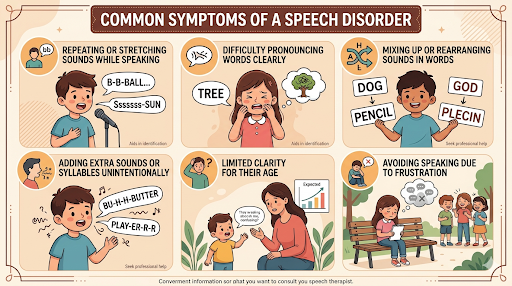
Common Symptoms of a Speech Disorder
The signs of a speech disorder can vary depending on the type and severity, but certain patterns are commonly observed. These symptoms may appear differently in children and adults.
In children, early signs may include:
- Repeating or stretching sounds while speaking
- Difficulty pronouncing words clearly
- Mixing up or rearranging sounds in words
- Adding extra sounds or syllables unintentionally
- Limited clarity for their age
- Avoiding speaking due to frustration
In adults, symptoms may look like:
- Slurred or unclear speech
- Trouble finding or forming the right words
- Speaking too softly or with reduced voice strength
- Hoarse, breathy, or strained voice quality
- Noticeable pauses or interruptions while talking
- Changes after injury or illness
Some individuals may experience more than one symptom at the same time. If these challenges persist, it’s important to seek professional guidance for proper evaluation.
What Causes Speech Disorders?
A speech disorder can develop due to a wide range of medical, developmental, or environmental factors. These causes may differ between children and adults.
- Brain-related conditions: Damage caused by stroke, head injury, or neurological disorders can affect communication, especially in adults.
- Muscle weakness: Poor control or weakness of speaking muscles can lead to unclear or slow output.
- Vocal cord problems: Damage or strain in the vocal cords can affect voice quality.
- Developmental conditions: Disorders such as autism or Down syndrome are often linked to communication challenges in early years.
- Hearing loss: When a person cannot hear sounds clearly, it impacts how they learn and produce words.
- Degenerative diseases: Conditions like Parkinson’s disease or ALS may gradually affect speaking abilities in adults.
- Serious illnesses: Tumors or cancers affecting the mouth or throat can interfere with communication.
Certain risk factors may also increase the likelihood of developing this condition, such as premature birth, low birth weight, family history, or ongoing ear, nose, and throat issues.
Understanding the root cause is essential, as it helps professionals design the most effective treatment plan for both children and adults.
Speech Disorders in Children: Early Signs and Intervention
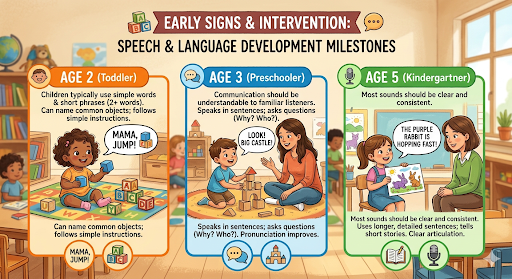
For parents, recognizing early signs of speech disorders in children can make a significant difference. Every child develops at their own pace, but certain milestones help guide expectations.
By age 2: Children typically use simple words and short phrases
By age 3: Communication should be understandable to familiar listeners
By age 5: Most sounds should be clear and consistent
Red flags to watch for include:
- Not speaking words by 18–24 months
- Difficulty being understood by age 3
- Persistent sound errors beyond age 4
- Limited interaction or avoidance of communication
These challenges can feel overwhelming, but early diagnosis leads to better outcomes. Timely support can improve communication skills, confidence, and social development. If you’re unsure, refer to child development milestones for guidance.
Treatment Options for Speech Disorders
The good news is that a speech disorder is often treatable with the right approach. Treatment plans vary depending on age, severity, and underlying cause.
- Speech-language therapy: This is the most effective and widely used approach. A therapist helps improve pronunciation, fluency, and overall communication through structured sessions.
- Play-based therapy: Commonly used in speech disorders in children treatment, this method uses toys, games, and interactive activities to encourage natural development in a fun way.
- Contrast therapy: This technique is especially helpful for children with sound errors. It focuses on teaching the difference between similar sounds (like “t” and “k”) to improve clarity and correct pronunciation patterns. It plays an important role in speech disorders in children treatment.
- Oral-motor therapy: This approach strengthens the muscles used for speaking, such as the lips, tongue, and jaw. It is beneficial for individuals who have difficulty with muscle coordination or control.
- Augmentative and Alternative Communication (AAC): Tools like picture boards or speech-generating devices support individuals who have limited verbal ability, helping them communicate effectively.
- Ear devices (hearing support): For individuals with hearing loss, devices like hearing aids or assistive listening tools can significantly improve development and clarity, especially in speech disorders in children treatment.
- Behavioral and cognitive approaches: These help individuals manage anxiety, build confidence, and improve communication in social situations.
- Medication: In some cases, underlying medical conditions such as neurological disorders may require medical treatment alongside therapy.
- Rehabilitation therapy: Particularly important for adults, especially after stroke or brain injury, to help regain lost communication skills.
- Parent involvement strategies: A key part of speech disorders in children treatment, where parents are guided on how to support practice at home through daily routines and interactions.
At Nurturers, founded by Swati Suri, a special educator with over 10 years of experience, therapy plans are designed to suit each individual’s needs. Whether it’s for children or adults, personalized care leads to meaningful progress.
When Should You See a Specialist?
If you’re concerned about a possible speech disorder, it’s always better to act early. Consider consulting a speech-language pathologist if:
- Your child is not meeting communication milestones
- Speech is difficult to understand beyond expected age
- There is a sudden change after illness or injury
- You notice persistent stuttering or voice issues
- Communication challenges affect daily life or confidence
Even if concerns turn out to be minor, early consultation provides clarity and peace of mind. Seeking help is a positive and proactive step.
Conclusion
A speech disorder can affect communication at any stage of life, but with the right awareness and support, improvement is absolutely possible. From understanding types and symptoms to exploring treatment options, early action makes a meaningful difference. If you notice signs in yourself or your child, don’t hesitate to seek guidance. At Nurturers, we’re here to support you every step of the way—because every voice deserves to be heard.